When We Last Left Our Heroes...

It's been a busy week for us here at Theology of Games—unfortunately, not because of gaming, but because of our busy lives. But we did get out a few new reviews, and share some news about the gaming world with you all! Stay tuned for more from the world of gaming next week! Here's your weekly recap of the week that was, on TOG! We all got giddy over the news of Wizkids' plans to release a Lord of the Rings themed dice building game!

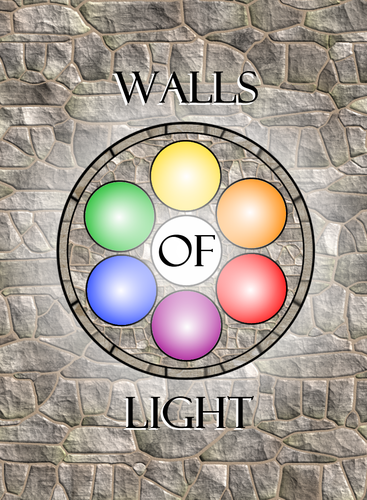
Jeremiah reviewed the indie game "Walls of Light".

We looked for a little feedback on the blog and the possibility of a video post or two.

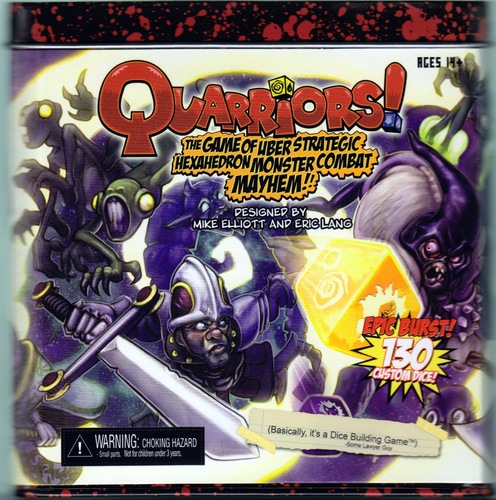
And Firestone reviewed Wizkids original dice builder, Quarriors!

Thanks for reading and thanks for the feedback! We hope you're enjoying reading the blog as much as we are writing it!

Quarriors—A Quawesome Queview...Errr Review

By Firestone Maybe the most influential game of the last few years is Dominion. It’s made a TON of money and spawned a ton of similar games. WizKids' Quarriors is one of the more unique “copycats” to emerge from the pack.

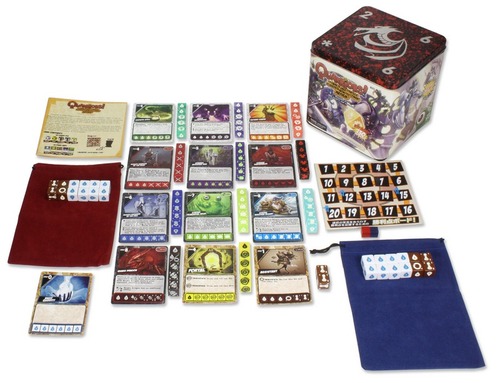
It’s called a dicebuilding game, rather than a deckbuilding game. Rather than buying various cards, as you do in Dominion, you’re buying dice. And let me tell you, these dice are cool. They’re all sorts of colors, and each type is unique and engraved with a different design.

Quiddity is the currency in the game. Just like in Dominion, you start the game with a few “coins”—in this case, a few dice that either give you 1 point of Quiddity (on 5 of the 6 sides of the die) or 2. You also start with a few weak monsters.

I won’t go into all of the details for a turn—they’re kind of involved, and MUCH easier to explain when someone’s sitting in front of you where you can explain by showing. Basically, if you have any creatures left alive at the beginning of your turn, you score VPs—then they go away. Then you draw six dice and combine them with any that were already in your Ready area, roll them, and decide what to do with them. Any Creatures you rolled will now attack each of your opponents. (That’s one of my favorite things about this game. There’s no trying to decide whom you should attack. You just attack each opponent, regardless of how many there are.) Your opponents’ creatures may be killed because of the attack, but any that survive and are still alive at the beginning of that player’s turn will score VPs. Now you buy dice. There are two “classes” in the game—Spells and Creatures—and you can use any Quiddity you rolled to buy one of those die.

The game ends when someone scores a certain number of VPs—which varies depending on the number of players.

There are a few things for Christians to consider before playing the game. Spells are the first thing. It doesn’t feel as though you’re “casting a spell.” You’re just rolling a die that gives you a certain boon if it lands on a certain side of the die.

Another thing to consider is that the second expansion is called Rise of the Demons.  One of the Creatures you can purchase is a Demonic Overlord. I know it’s “just a game” but I’m not comfortable with my kids using a Demonic Overlord to help them out in the game, so I won’t be purchasing that particular expansion. They’ve since come out with another expansion called Quarmageddon, and there’s nothing questionable in that expansion.

Let’s be honest: When you’re dealing with dice, the luck factor goes way up. But the bottom line is that it’s just a ton of fun to roll these terrific dice. I’ll play Dominion with my gamer friends, but I play Quarriors with my family. It’s lighter and luckier, but it’s also more fun.

A Look Inside?

So, without going into a long story full of slightly boring details, I will simply say Firestone and I (Jeremiah) will be in the same state next week for several days. And while we won't have much free time to work on the blog, we have kicked around the idea of doing something fancy, like a video review, or celebrity death match, or something of that nature while we're in the same time zone. (Okay, videos on the internet aren't exactly "fancy.") I thought I'd take a minute and open up the forum to you. our readers. Does a video feature pique your interest? Is there a title you think we could review together that would benefit from hands-on in-your-face video review action? We'd love to hear your suggestions! Leave 'em in the comments or over on our Facebook page! And as always, thanks for reading!

Walls of Light - Review

- By Jeremiah A few weeks back I was sent a review copy of the indie game Walls Of Light, designed by Jesse Catron (designer of the Kickstarter project Salmon Run!), and during last week's game night I had the chance to pull it out and give it a go. So here's what I thought about the game!

There are some elements of the game that I really liked, and others I could see definite room for improvement on...

The Game Concept and Theme - The back story for the game is quite endearing: Players take on the role of master craftsmen who have been commissioned to restore the stained glass windows of an ancient cathedral to their former glory following years of neglect.

The Game Components - This is where the game falls short for me. To be fair, the game is independently published and the components themselves are manufactured through TheGameCrafter.com, so many of the pieces are not custom designed for the game. The boards are custom printed, but they are designed to work with generic game pieces. So while I appreciate the creativity of the game design, some of the mechanics don't quite perform up to expectations.

The Setup - There are 6 "window" boards; each one has 2 sides with different arrangements of "panes." Most of the panes are blank but a few have a color or a special ability filled in already. There are two score keeper boards that are placed in the middle of the table, and the six windows are placed 3 on each side of the score keeper boards and assigned a number 1-6. Each player is assigned (or chooses) a color, red, blue, or yellow (note they are all primary colors). They then get a handful of their color's "winks" (yes these are translucent, generic "tiddly-winks"), which we all immediately agreed to call panes instead of winks, and the game begins.

Game Play - The player turn starts with the role of three d6, one of each player's color. The player can then place one of their panes on a blank spot on a window that corresponds to a number rolled on any one of the dice. If there are colors that are already in place on the window that matches the number rolled on the die matching that player's color, the player may choose to place on top of another color to create a secondary color. The players can choose to also play a card from their hand that will let them swap panes, or change a number that was rolled, or re-roll etc.

Scoring - When a window no longer has any blank panes, the window is scored; whichever player placed the last pane gets a bonus for doing so, which gives them extra points for each different color on the window. Then each player scores points for each of their own panes on the window (this is why players would have reason to cover up other colors). Once a window is scored it gets flipped and marked complete; it can be played on and scored multiple times, but once all six have been scored at least once the game is over.
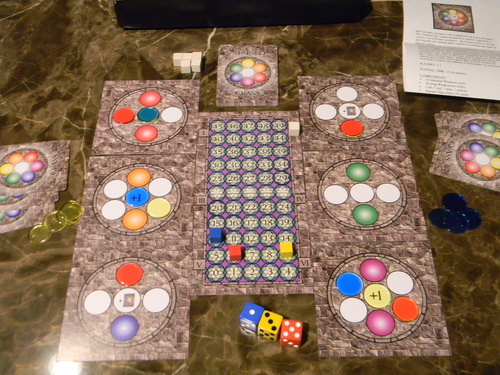
So What Did I Think? I think it was a very light weight game with a great concept, but there were a few things I felt could have been executed better. The winks, when placed on top of another color didn't necessarily make the secondary color we were expecting (according to our remembrance of Kindergarten art class), which made it necessary to keep track or move them to see what colors should be represented in that particular spot of the window. This is also not a game for the color blind. (Oddly enough, two of my gaming friends, including my co-blogger, are.) There was also some dispute at the table over the colors printed on the boards. The blue looked purplish without another printed purple spot face up somewhere to contrast it. Again, I think the concepts were sound and original, but I think the game suffered in these areas from the "generic" nature of its manufacturing. In terms of game play, after the first turn we took off and started to create our own strategies, which got more interesting the more we started invading and covering each others colors to keep them from scoring. To me that's where the fun in games like this comes in: Figuring out what your opponents are doing, and then reaching for your monkey wrench—there are plenty of opportunities for that. The biggest complaint I had in the game was that you could continue to flip and score windows continuously, which caused great ambiguity with the end game. Eventually I found we were doing the math to try and figure out when to put the second-to-last pane down to let the next person complete the window, ending the game. It did allow for players who might have been way behind for most of the game to creatively place their panes to make a last minute run and have a shot at winning (which I did successfully) but I felt like we really could have kept the game going indefinitely.

Overall - If you can get past some of the tactile elements and maybe add a house rule concerning the end game, it's a fun little dice roller. We're excited to see what else Jesse has in store for us with the coming release of Salmon Run! Stay tuned for our interview with Jesse coming soon!

Thanks as always for reading!

Wizkids is Making a Lord of the Rings-Themed Dicebuilding Game!

Have you played Quarriors? Well you should. Come to think of it, we should probably write a proper review of it. It's a "dicebuilding game"—where you're using dice to build an engine to score VPS. It's like Dominion, with dice instead of cards...kinda.

Anyway...Wizkids just announced that they're making a new dicebuilding game that uses some of the same mechanisms—and cool new dice! There aren't many details, but it sounds like there are cooperative aspects to it--but that someone can be corrupted by the ring. Or something. Anyway, you can read the press release here, and keep an eye out for this game in early 2013. And we'll try to get a review of Quarriors in the mean-time.

When We Last Left Our Heroes...

It's been a busy week here at Theology Of Games. We had another great interview, a couple of reviews, and news about where our money will be going over the next few months. Here's what you might have missed...

We interviewed Bryan Fischer about his fowl upcoming game, Chicken Caesar.

You can take on the role of Jack the Ripper, or the detectives chasing him, in Letters From Whitechapel. Check out our review!

Jeremiah gave us a rundown of some recent Kickstarter games. This was well-received, so if you know of a game—or designed one!—let us know and we'll post about it!

In the year 3000... We reviewed a fun new card game, Plato 3000.

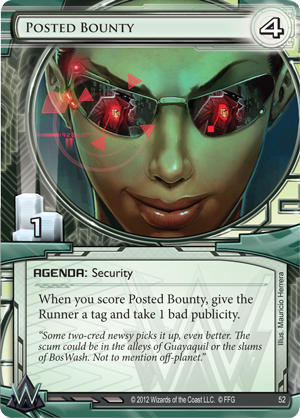
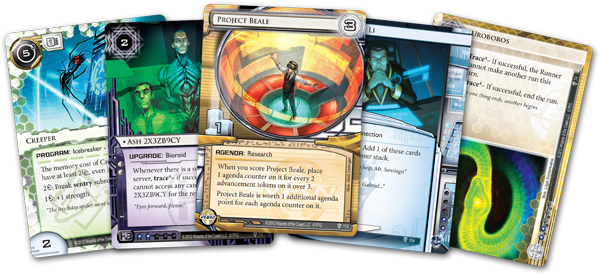
And we brought you some news about Fantasy Flight's first expansion for their massively popular Netrunner game.

Who knows what we'll have going on next week! (Seriously, does anyone know, because we sure don't...) You can be sure we'll have more news, reviews, and inter-views! Have a great weekend, and thanks for reading!

Fantasy Flight Announces the First Expansion Cycle for Netrunner

Get ready to save your allowance; apparently, Netrunner is a hit. The first batch sold out in minutes at GenCon, and now that it's hit store shelves it's selling well there, too. So Fantasy Flight has announced The Genesis Cycle, the first series of expansions (they call them Data Packs). Just as with Lord of the Rings: The Card Game, these will be monthlyish packs of sixty new cards (three copies each of twenty individual cards). They'll have some new cards for both the Corp and the Runner, and should retail for $15. You can check out the whole press release here. I (Firestone) had a chance to play a quick game of Netrunner this week—quick because my Runner got fried to crispy bits by a trap that I walked right into. Anyway, I loved it, and a copy is winging its way to me even as I type this. I'll have a review up ASAP. Thanks for reading!

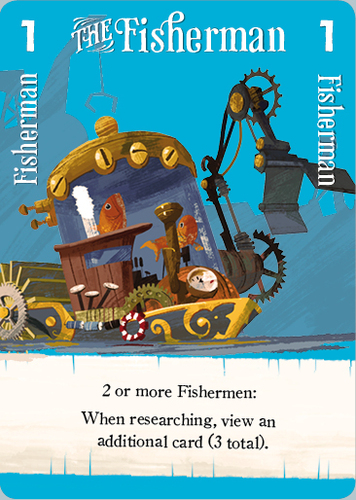
We Review Plato 3000

By Firestone I like being surprised by a game—well...pleasantly surprised, anyway. I opened up my recently arrived, Kickstarted copy of Glory To Rome and found a small card game that I’d completely forgotten was a stretch goal. It’s called Plato 3000, and it’s basically rummy with special powers.

The game comes with a 54-card deck of illustrated cards. The artwork is pretty cool; it’s kind of an apocalyptic steampunky series of machines in different kinds and colors. There’s also a rules reminder card—it would have been nice if there’d been more than one, though.

You shuffle the cards, deal 10 to each player, and then place the remaining cards on a Draw deck. There are two discards on either side of the Draw pile—a Scrap discard and a Research discard. A turn consists of drawing a card—either blindly off the top of the Draw deck, or off the top of either discard pile. If you draw off the Draw pile, you draw two and keep one—discarding the other to the top of the Research discard. Then you can play one Theory card (which all have special things they let you do), lay down one meld of three or more Job cards, and/or lay off on melds your opponent has down. Then you discard a card to the Scrap pile.

The various colors have special powers once they’re down in front of you as a meld. The Priest lets you lay down a meld when you have only two of a color. The Farmer lets you keep both cards when you draw off the top at the beginning of the turn. And the Soldier lets you attack your opponent’s melds and remove cards from them.

Just as in Rummy, once someone discards his or her last card, the hand is over. Cards in front are positive points, and cards in your hand are negative points. There are a few other scoring cases, but that’s basically it: rummy with special powers. You continue playing until someone reaches 100 points, which seems to be four or five hands. There are rules for team play, but I haven't tried that yet.

It’s a fun little game! Easy to teach, portable, based on a well-known game, and nongamer-friendly.

I guess the best endorsement I can give is this: I got my copy for free, but even if I hadn’t, I would still buy a copy.

Check back soon for our review of Glory To Rome, and thanks for reading!

Kickstarter Odds and Ends

It seems like more and more often there are more and more games being brought to market through Kickstarter. Today I thought we'd take a quick peek at a few up-and-coming titles, and some that are giant successes already! The first is the quirky "Salmon Run" a modular board/deck builder that recreates the epic struggle of fish to make babies... Designed by Jesse Catron.

Airborne in Your Pocket which only has a few hours left, is flirting with the $100,000 mark! That's $70,000 OVER the funding goal! The game is a co-op tile=laying WWII action game. It looks fun, but a little pricey too.

Heroes of Metro City - Another deck builder with a role-playing twist. Looks a bit like Dominion in spandex, with some fun superpower action tossed in.

Get Bit! Deluxe  Mayday Games is Kickstarting a new pirate themed version of their 2012 Origins award winner, with new graphics and dismemberment. And it comes in a nifty tin too!

There are just a few short hours left in the Resistance: Avalon campaign.

And don't forget, Mars Needs Mechanics! Nevermore games is still in the middle of their campaign for their second title. We interviewed designer Ben Rosset, and Nevermore games' co-founder Bryan Fischer, click their names to find out more about what's going on at Nevermore games!

And we watched Dice Hate Me Games' Great Heartland Hauling Co. roll in hitting their last stretch goal with seconds to spare! Read our interview with designer Jason Kotarski here!

So, what Kickstarter campaigns are you backing? Leave 'em in the comments!

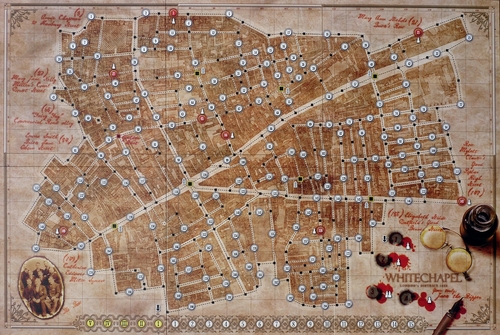
Don't Fear the Ripper--A Review of Letters From Whitechapel

By Firestone I’m not sure what the fascination is with Jack the Ripper. Is it because the murders were so gruesome? Probably. Is it because he was never captured? Almost certainly. All I do know is he’s been the genesis of some good books, stories, and board games. Letters From Whitechapel is the latter.

One person plays Jack, while the other players are detectives trying to track Jack down. The board is a map of London that has nearly 200 individual circle spaces that Jack uses—along with at least as many black squares that act as intersections the detectives use. At the beginning of the game, Jack secretly picks a space as his hideout. His goal is to commit a murder each night for four nights, and then make his way to his hideout. The detectives are trying to ferret out his hideout and make an arrest.

While a simple game, it would take a long time to explain exactly how a turn functions. Basically, Jack has a few turns to delay murdering a woman, but he eventually has to. Once he does, he has ~15 turns to make it back to his hideout. We weren’t quite sure why Jack would want to delay, unless he really needed the extra time to make it back. On nights one and two he kills one victim (it’s completely abstracted). On night three, he kills two, so you’re not sure which one he’s starting his Run from. And on the final night, he’s back to one murder. Jack has a couple of unique movement options that help hide his trail a bit.

Each turn, the detectives each move, and then they either make an arrest on an adjacent spot, or they look for clues on a spot. If Jack has been on that spot during that night, he has to say so. That’s how the detectives are able to slowly tighten the net around Jack.

There were some clever and interesting decisions to be made as the detectives. There’s lots of trying to figure out where he could be and where he couldn’t. There was a narrative feel, as toward the end we knew we were in the right area, but we just couldn’t be quite sure where his hideout was. There’s just a lot of tension. (I never played Jack, so I can’t comment on how “fun” that was.)

I’m not thrilled about the length. The box says it plays in 60 minutes. THE BOX LIES. With good players, I could see this going at least two-and-a-half hours—probably more. There are also times when one or more detectives will end up WAY away from where the action is. One great house rule I’ve read about gives detectives the option to move three spaces (rather than two), if they’re not going to look for clues. That just seems clearly better.

Gameplay aside, it’s hard to ignore the subject matter. Someone will be Jack, and that someone will be “killing” someone. It’s abstracted completely, but it’s still there and it’s still morbid. I can’t really say this is a great family or youth group game. It simply has a darker feel than other Jack the Ripper games, such as, say…Mr. Jack.

It’s a clever and unique game that might be the best deduction game I’ve ever played.

Thanks for reading!