
Hail Caesar - an interview with Bryan Fischer

If you went to Gencon this year, there's a good chance you heard the buzz about Chicken Caesar. Or you may have been lucky enough to sit in on a demo of Nevermore Games big box game of Roman/poultry politics. More than a tasty salad, Chicken Caesar is hitting hobby stores this month and the buzz has gamers waiting with baited breath to see what the excitement is all about. So we had a little chat with Bryan Fischer, co-designer of Chicken Caesar, and co-founder of Nevermore Games about Chicken Caesar, Nevermore Games, and life in general. Take us through the story of how Nevermore Games got on the map?

My friend, Corey Phillips, and I started Nevermore back in 2010. He was the business guy and I was the creative guy. It wasn’t long though before I realized we really needed another creative guy, so we brought John Sizemore on board. I had been working on Chicken Caesar at the time and pitched it to John. We ran with it and started Nevermore’s mission: to facilitate friendships through strategic and innovative games.

For those of us who didn’t make it out to Gencon, can you give us a quick overview of Chicken Caesar?

Sure thing! In Chicken Caesar, players represent chicken families who are sending their roosters into coop politics, which of course are modeled after the Ancient Roman Government. Through deal making, breaking, bribes, and manipulation, players will compete for legacy.

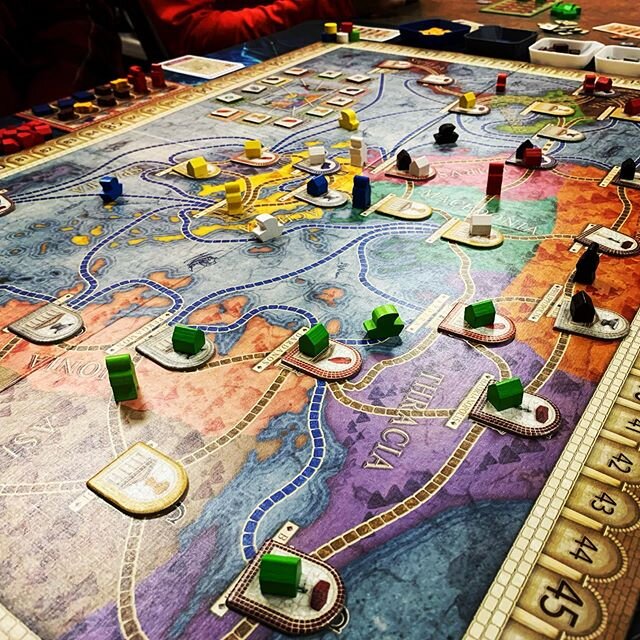
There are five offices in the game where roosters have actions they have to complete. The roosters in the Aedile’s office decide the tax rate for the round, which in turn determines how upset the coop guards are (and how many will betray the coop by letting the fox in to gobble up politicians). The roosters in the Praetor’s office decide where loyal and traitor guards go. The Censor can exile people, and the Consuls can take bribes to “rewrite history” and give roosters additional accolades they never earned in life. And of course there is Caesar, who gets the all-powerful Veto token and makes lots of corn (money).

So which came first, the Chicken Caesar or Nevermore Games?

Chicken or the egg, huh? Well, both. They happened simultaneously really. I had been designing games for years and about the same time that Corey and I started Nevermore, I was also toying with Chicken Caesar. Of course, Chicken Caesar didn’t really take the shape of its current form until John came on board.

When and how did the idea for Chicken Caesar hatch? (Okay, I promise that’s the last chicken pun!)

These puns are getting pretty fowl ;)  Actually, my wife came up with the name. She was eating a Chicken Caesar wrap, and I was of course annoying her with talk of game ideas I had and she said “Why don’t you call a game Chicken Caesar?” We both had a good laugh. Little did she know I was seriously storing that one away.

What were the pros and cons (if there were any) to co-designing Chicken Caesar instead of going it alone?

For me, co-designing is the ideal situation. I don’t think any game in history has been designed entirely by one person. Whether it’s through co-authorship or not, game designers have play testers and friends, critics and spouses who influence the design process and often come up with ideas for mechanics and theme. Having people to bounce ideas off of is a huge necessity in game design.

John and I make a great design team. He’s a walking economics textbook and calculator rolled into one. It compliments my theme-centric approach to gaming and I believe that’s the greatest pro of co-designing games. Complimentary designers can take collaborative game design efforts to a new level. That being said, John and I argue a lot. That’s what happens when you spend so much time together trying to get something right. It can be stressful, but ultimately the arguing leads to better communication and therefore better game design. I guess that would be a con that turns into a pro.

What’s the one element of Chicken Caesar that makes you all giddy?

Well, mechanically it’s the Suffragium (the voting marker) that makes Chicken Caesar unique in its approach to luckless negotiation and shrewd bargaining. But really, for me, it’s that moment when a player about to be passed the Suffragium suddenly realizes… “I’m going to be deciding the fate of someone else’s rooster; I have the power, and I can be bought!” that gets me. Well into the testing of Chicken Caesar, players were discovering new ways to bribe each other and get epic revenge. Fantastic!

How do you balance being a person of faith and a big geek?

It’s funny how faith and being a geek interact sometimes. Some geeky endeavors, like science fiction, beg answers to questions of morality and truth. They present impossible and (often) unnatural circumstances where people have to make decisions often alien to us. It’s fascinating. Fantasy can often blur the lines for people of faith through use of magic and divination, but it’s not always the case. Look at Tolkien for instance. The Lord of the Rings trilogy is touted as a great Catholic work by many theologians. C.S. Lewis was much more overt. Read A Canticle for Leibowitz by Walter M. Miller, Jr. and you’ll see how faith can only make a science fiction experience even deeper.

I find the best way to reconcile something that might be offensive to my faith is to first learn about it. If it’s a game, I’ll look at the rulebook or play it. If it’s a film, I’ll usually watch an excerpt or do some reading about the story. There have been times when, after researching something, I have still found it offensive. And the opposite has also been true.

What has been most surprising to you about the response to Chicken Caesar from the gaming community?

The fact that people know of the game! It’s been incredible. At GenCon we had the game set up in a number of places and people walked by and said “Oh yeah, it’s that Chicken Caesar game!” On top of that we met a ton of our Kickstarter backers there and sold out every demo event for the game through Saturday. John and I walked over to the Asmodee booth one morning and while chatting with a French guy working the booth, he says “Wait, you two are the Chicken Caesar guys?! Very cool!” So cool.

So, we've been following the Mars Needs Mechanics Kickstarter; beyond that, what's in the future for Nevermore Games?

We actually have quite a few things lined up for the future. We're working with some really awesome designers to bring the world an awesome, big game next Spring. We have some others in the lineup for after that, so expect plenty of games in 2013 from Nevermore.

Okay, the 1-word 5! Give us your 1-word answers to these questions. (For names we’ll allow 2 words!)

Favorite doctor? (In the BBC Series Doctor Who, please don’t tell us your dentist’s name!)  David Tennant

Who shot first, Han or Greedo? Greedo

Favorite salad?  Potato

Favorite game?  Lifeboat

Cylons or Sleestaks?  Caprica-Six ;)

If you'd like to place your pre-order for Chicken Caesar you can do so RIGHT HERE!

You can also find out more about Nevermore Games RIGHT HERE!

And of course they're on Facebook and Twitter as well!

A big thanks to Bryan for spending some time with us, and as always a big thanks to you for reading!

When We Last Left Our Heroes...

It's hard to believe we've been at this for over 2 months now! We are so grateful for your support and interest in what we do here! As always, we would love to hear your feedback on what takes place here at Theology of Games! Here's what we were up to this week!

We took a look at the Kickstarter campaign from Nevermore Games for their newest title "Mars Needs Mechanics".

In other Kickstarter news, The Great Heartland Hauling Co. closed out its funding drive for its upcoming release with Dice Hate Me Games this week, with a successful campaign!

Jeremiah reviewed the Matt Worden Games dice-rolling, car-racing party game, "Dicey Curves".

Fantasy Flight Games gave a whole lot of details about their new Star Wars Living Card Game.

And Firestone reviewed the newest title from Small Box Games: Tooth & Nail: Factions!

Again, thanks for reading, and keep the feedback coming!

Tooth & Nail: Factions

By Firestone A while back I wrote about my Love/Hate relationship with Kickstarter, and in that article I mentioned a project I was going to back on faith. Well Tooth & Nail: Factions is that game. Was it worth my backing dollars?

Well you’ll just have to read and find out…

The game is put out by Small Box Games, so it comes in a…small box. I like the size a lot, but there’s not a lot of room for expansions—if they make any. (Though it should be noted my copy is sleeved.) It plays 2-4 players, but based on the different rules for 3 and 4 players, it seems like it would just be way better with only 2—and I've only played 2-player so far...

So the game comes with ~200 glossy cards. They’re decent quality, though I would suggest sleeving them. The game is all cards, so you’re moving, turning, playing, holding, and shuffling them a lot. It’s not a deck-builder, so you won’t be handling them as much as you would in, say, Dominion, but still…

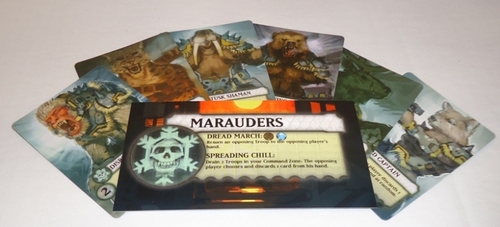
Those cards are divided into six Factions, each of which is designed to feel and play differently than the others, and Action Cards. Each Faction has five copies of six different troops. The game also comes with six oversized Faction cards that spell out each Faction’s unique in-game ability. My Kickstarted copy also came with six alternate Faction cards for more variety, and a Dogs of War variant that I have yet to try out.

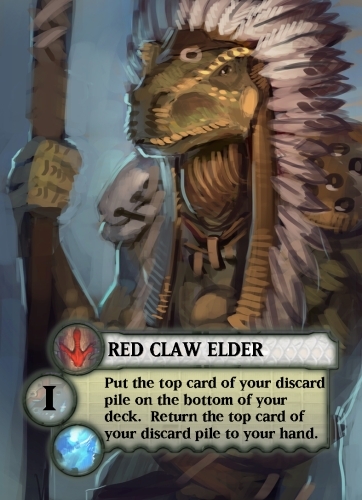
I really like the artwork on the cards. It’s not super sharp, like some of the CCGs Fantasy Flight puts out (which I also like, btw). But this feels more raw and organic and earthy.

You’re trying to cause your opponent to run through his or her deck before you do: First person out of cards in their draw pile loses. So cards are life points, but they’re also your weapons to defeat your enemy.

The play area is divided into the War Zone and the Command Zone; when you play a troop card, you’ll play it down to one of those sections. The War Zone allows you to directly attack your opponent’s deck (but you ignore the special text on the troop card), or the Command Zone, where you don’t directly attack, but you will end up using the special text to affect things. The other important thing about the Command Zone is that at the beginning of your turn you’re able to draw one card for each card you have in your Command Zone.

You can either draw directly from your stack of cards, or you can draw an Action Card—a set of cards that are available to each player on his or her turn. You’ll need to use Action Cards to play cards down to the table, and to initiate an attack from the War Zone. One of my favorite aspects of the game is that the beginning of each turn forces you to make a tough decision about which type of cards you draw for that turn.

You don’t have to play an Action Card to activate a card in your Command Zone, but you have to discard the card after activation unless you have a copy of that exact card in your hand that you can discard. Sometimes losing that card is still a good choice; sometimes it isn’t… More tough choices.

The games last 15-30 minutes, and because of the variety of Factions (and 30 possible combinations of matchups), it’s easy to say, “Let’s play another quick game.”

Yes, there’s some luck of the draw, but I think each turn is more an exercise in playing what you have in the best way, rather than hoping you draw that one awesome card that’s in your deck. <cough-Magic-cough>

The Factions don’t feel completely different, but there’s definitely a different feel to each. The Enrodentia (rats) are weak, but have swarmish abilities. The Red Claws (dinosaurs) can take a beating (by pulling cards from their discard pile back into their draw deck). The Ostra Vultura (steampunk vultures!) mess with their opponent’s hand by forcing them to ditch cards, or by pulling cards from the opponent into the Vultura’s draw pile.

My one complaint is that sometimes the matchups seem to favor one side a bit. In one game my Pride Faction’s ability forced my opponent to remove his discards from the game, but he was playing the Vultura, and they don’t generally resurrect cards from their discard pile, so it didn’t really affect him. Meanwhile, his ability forced me to randomly discard a card from my hand. THAT WAS MUCH MORE USEFUL. But it could be that more experience will force me to be creative about what strengths I do have. It’s certainly not a deal-breaker at this point; it’s just something to be mindful of.

Overall, I’m liking Tooth and Nail: Factions quite a bit. And there are a few variations and expansions that I haven’t even touched yet, but I’m excited to give them a whirl!

This Kickstarter experience was great; I regret nothing. Thanks for reading!
Hard to See the Future is...

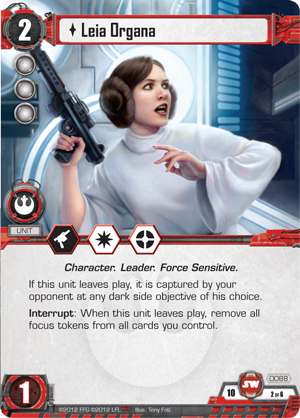
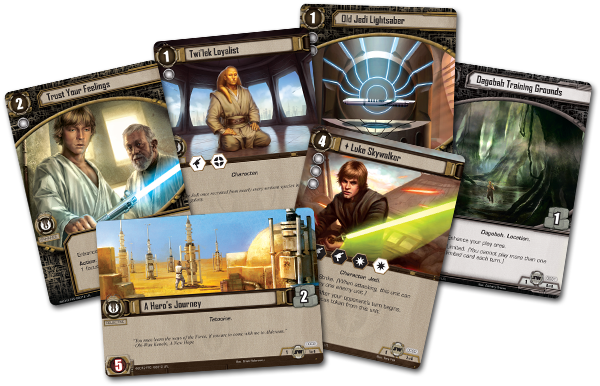
Fantasy flight has unveiled more details about their newest addition to their Living Card Game family: Star Wars the Card Game. This week on their Web site they gave us a sneak peek at some of the gameplay mechanics, deck building concepts, and new artwork.

The Artwork - Looks fantastic! It's original, and not just more of the same screen shots rehashed into a game format, but also not a completely new re-imagining of the classic characters we all grew up with. Instead the images appear to be an artistic translation of well known images from the movies!

The Gameplay - Back in February FFG told us they were scrubbing the original game design entirely (which at the time was a co-op game, and had some similarities to their Lord of the Rings title). And scrub it they have. The game is now a 2-person head-to-head battle for control of the galaxy. The Empire is attempting to reinforce its hold on the galaxy, and essentially wait out the Rebels, by advancing the "Death Star Counter." Meanwhile the Rebels are trying to destroy 3 of the Empire's 5 objectives. They've also included a "new" system called "edge battles"—a battle mechanic that revolves around players secretly bidding cards face down and revealing them to see who gets first strike that turn. There will apparently be a fair amount of effects and abilities triggered during these edge battles to make things interesting.

Deck Building - This is by far the most innovative concept of the game. Players will build their "Command Deck" by selecting 10 (or more) objectives. Each objective has a set of 5 cards that come along with it, you set your objectives aside, and shuffle the 50 cards that came with them and there is your deck!

My Thoughts - I really like the artwork as I said earlier, I think the screen shot thing has been done to death (although, maybe not so much in this century), but choosing to not go solely on screen shots will allow for more creative freedom as the game grows and changes—we could even see characters, ships, and locations from the novels and other iterations of the Star Wars universe come into the game!

I don't know if I'm sold on the "edge battle" thing; when I first read it, it sounded all too familiar to me, and smacked of "Young Jedi," and, well, we don't need to go there again. I much prefer a game that's multi-player; a Living Card Game is typically a hefty investment, and I'd like to be able to play with more than one friend at a time if I'm going to dump some cash on the game. That being said, I'm glad they took the time to revamp the title,; I think a Star Wars rehash of the Lord of the Rings game would have been more of an annoyance, and shown some contempt toward us gamers.

The deck building concept seems really interesting to me. I think new gamers, or folks who haven't built a deck from the ground up, are going to be able to compete and not be overwhelmed right out of the gate. I also see deck building veterans getting super frustrated because they're going to be unable to jettison some unwanted fluff from their deck! It poses a challenge to both the green and grizzled.

Fantasy Flight still hasn't given a hard street date for the title; they are still saying that the release will be sometime in the 4th quarter of this year. I imagine they won't miss the Christmas rush, so I'm expecting it to hit shelves around Thanksgiving (hopefully sooner!).

You can read the news release on Fantasy Flights' Web site RIGHT HERE!

We always love to hear your thoughts on this type of thing! Are you excited for the game? Why? Why not? Sound off here and leave it in the comments!

Thanks for reading!
Of Dice and Cars - A review of Dicey Curves

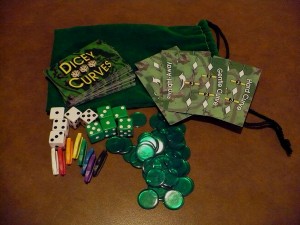
-by JeremiahMatt Worden of Matt Worden Games was kind enough to send me a review copy of his racin' and rollin' dice game Dicey Curves. I finally had the chance to pull it out and give it a test drive. Want to know what I thought? Good, keep reading... The Basics - The player’s turn breaks down pretty simply for this party game of up to 8 players: Roll Dice, Move Cars, and Gain Control Chips (if possible). Each player rolls at least 5 d6 (Six sided dice) on their turn, and for every 6 you roll, you get to add an extra d6 and re-roll both the 6 and the extra die. You then group them up in pairs, triples, doubles, etc. (pairs consist of either of matching numbers or sequential numbers). Having a triple allows you to move a race car along the track 3 "spots", a quad 4 spots, etc. You can play a single, but it will mark the end of the movement of that car for that turn (players can -and should- control multiple cars in a game, if there are less than 8 players).

Control chips - allow you to do some nifty maneuvers depending on the phase of your turn. If you're rolling dice you can add a d6 set to any number 1-5, or re-roll any amount of dice already in play. If you're moving cars already they give you the ability to continue playing dice after you've played a single; juke, which switches spots with a car next to yours; or take control of another player’s car. I mostly found that using them to continue playing dice after a single allowed for optimal use of your dice in a turn and didn't use them for much else while moving cars. You gain control chips by turning in unused dice at the end of your turn.

The Race Track - is made of cards revealed at random from a shuffled deck. There is no set length to the race, you simply tuck the finish line somewhere in the deck and fire up your engines. The track consists of three elements, Spots, Paths, and Gates. Spots determine how far you can go depending on the dice groups you roll, Paths determine how you move between spots, and Gates are essentially roadblocks that require a specific group to be played before allowing the racer to pass. The Gates simulate the degree of difficulty for certain turns or areas of the track, requiring racers to throttle down to navigate. There is also a suggested variant for setting up the track first in a circle around the table, but I found the uncertainty of not knowing what was coming around the next bend more exciting!

My Final Thoughts -I definitely recommend playing the game with as many cars on the table as possible. We found that with only 4 cars in the race it was very easy for a player to pull out to a lead and never look back. It's also important that the deck gets shuffled well!! I can't stress that enough, as a section of our first walk through yielded a Straight Away or Wide Open card 7 out of 8 pulls which added no challenge to the game. I wasn't a huge fan of the artwork either, but the components were overall what you'd expect from an indie publisher and the game itself holds up well.

What I took away from Dicey Curves was a quick moving, fun party game, the control chips were well thought out, and remove a good chunk of randomness from the game and inject a healthy shot of strategy into a game that would otherwise be completely left to the luck of a roll. The Dicey Curves expansion Danger! Was just released, I'll be reviewing that soon, so stay tuned! You can grab a copy of Dicey Curves right here!

The Great Heartland Hauling Co.—2 days and Counting...

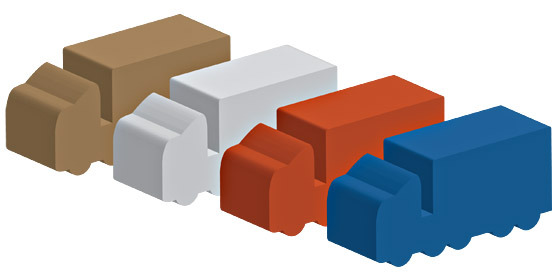
With just over two days to go, The Great Heartland Hauling Co. is sitting at $25,000 on their Kickstarter campaign! They've already made enough to include an expansion, and cool wooden truck pieces, and they're only ~$2,000 away from adding the ability to play with 5 players, and a couple of extra Badlands cards to throw into the mix. If you're one of those people who waits until the last minute, we're nearly there! And if you'd like to read our interview with designer Jason Kotarski, click right here on this blue underlined area that you're reading right now. Thanks for reading!

Mars Needs Mechanics Hits Kickstarter!

Well if you joined us earlier this week for our interview with game designer Ben Rosset. You know that today is the day that the newest title from Nevermore Games - Mars Needs Mechanics - hits Kickstarter. You can check out and back the campaign RIGHT HERE! While you're there you can see a few different videos about the game including some gameplay demos.

You can see the full interview with Ben Rosset here.

They're up and running and off to a good start, best of luck guys!

Thanks for reading and have a great holiday weekend everyone!

When We Last Left Our Heroes...

It's been a bit of a slow week for us here at ToG. Life has intruded in interesting ways... But that doesn't mean we didn't post some cool stuff!

We started off the week with a review of the GenCon hit Smash Up!

We were one of the first to report that Rob Daviau is leaving Hasbro and striking out on his own.

We interviewed Ben Rosset about his upcoming game, Mars Needs Mechanics.

We showed you the new trailer for Mars Needs Mechanics.

We reported on Looney Labs' expensive new Kickstarter version of Are You a Werewolf?

And finally, we reviewed that behemoth of a fantasy game, Mage Knight! Thanks so much for reading! We're taking a much-needed break for the Labor Day weekend, so we'll see you on Tuesday. Next week we'll have a review of the brand-new Tooth & Nail: Factions, and much more. Stay tuned!

Mage Knight - These Aren't Your Big Brother's Clix!

by Jeremiah

In the year 2000, Wizkids hit the market with their debut to the "Clix" system with a miniatures game called Mage Knight; it was a hit. Spawning Mech Warrior and the still-popular Heroclix titles for the company. Several years and multiple expansions later, Wizkids decided to release Mage Knight 2.0 and deem every figure previously created null and void in tournament play. Exit Mage Knight as we know it, and the eventual demise of Wizkids.

Wizkids is back up and running, and really hitting some home runs as they slowly but surely reboot titles that were gaming staples for much of the first decade of the 21st century. Which brings me to this week's review: Mage Knight the board game.

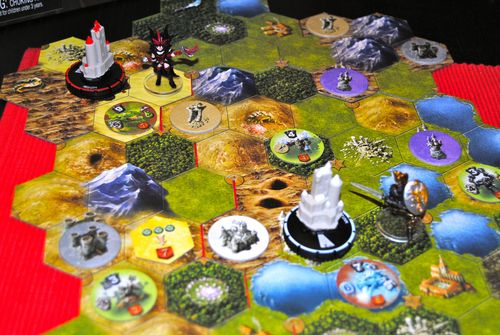
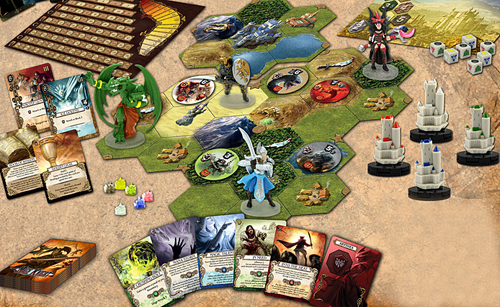
The overview—Think 40K, D&D, MTG, and any LCG all mixed up together. It sounds schizophrenic, but it works. The base set comes with 4 characters that players choose from; you then embark on a scenario (1 of 11 included, or if you're daring you can create your own or scale up or down your own) and into a land that is revealed as you explore. Along the way you encounter baddies, keeps, monasteries, dungeons...well, you get the idea. Killing a monster, conquering a keep, exploring (adding a new tile to the board) etc, will earn you "fame' (Experience Points, the ultimate goal in most scenarios is to have the most fame) which allows you to level up, which gives you stronger stats, allows you to gain new skills, control more allies...sound familiar?

Here's where the game takes on a different spin, and becomes very intriguing. You control all of your actions through your "Deed" deck. You have 5 cards in your hand (you get a higher hand limit as you level up), and these cards dictate what you can do on your turn. There is no intricate time-based system to keep track of; there is no Dungeon Master telling you what you can or cannot do. There is a board that consists of tiles that are revealed as you explore, and your own deck of cards. You also cannot die—taking wounds doesn't take away hit points, it only fills your deck with wound cards that clutter up your hand and inhibit you from taking more actions on your turn. Play continues in turns and rounds. A day round followed by a night round and so on. Day and night rounds have different effects on traveling across certain terrain and your ability to see what a certain baddy is before you jump into battle with it.

The Mechanisms—They're actually fairly clean and easy to learn—on the other hand, the multitude of combat rules and special abilities for your foes can be a little much to swallow when you first jump in. Playing cards to do anything and everything is a unique twist on a game like this, and you can really come up with some great combos to accomplish a lot on your turn, but it takes some good base knowledge of the gaming system and the cards in your deck.

I really enjoyed this game, but be warned: If games such as Battlestar Galactica are a marathon to you, Mage Knight is an Iron Man race! The longest scenario included is estimated to be about 8+ hours! It's definitely geared for a multiple-sitting experience.

Beware—As with most games of this nature that take place in some sort of "fantasy realm" the use of darker magic and spell casting is highly prevalent. But there's no flavor text on the cards, so as the game is played it feels pretty innocuous. About two rounds into the game I was informed that my character was a "Blood Cultist." It didn't really have any effect on the game play or the cards in my hand; all the players have the same cards—only different amounts of certain ones. I happened to have a few more cards that were more aggressive in nature, but as I leveled up I could easily select skills and cards that were geared more for healing and being a nice guy. But if casting spells and fighting wizards in towers and such gives you pause, it's best to steer clear of this one.

All in all, it's a deep gaming experience, with nicely tuned mechanisms to help take out some of the randomness of most card-based systems. I'm hoping for expansions to come soon that will offer more characters that are of a less evil persuasion.

Thanks for reading!

Looney Labs Launches a Kickstarter!

A few days ago the folks over at Looney Labs, headed up by Andy Looney, launched a Kickstarter campaign for the deluxe edition of "Are You a Werewolf?" If you haven't played the original game, it's essentially a werewolf version of the classic party game "Mafia," but uses cards to assign roles instead of an Moderator-type person. The deluxe edition, is actually pretty clever. It uses those little picture viewers they try to sell you at every theme park in the world. So instead of being handed a card, that could be marked/nicked up, you grab a picture viewer, take a peek and see who you are. I imagine these picture viewers could get nicked up too, but I would think they would be more durable, and it's pretty much impossible for someone to "accidentally" look at another players role.

Personally, I'm a fan of the old school Mafia game, but this could be a cool way to facilitate a Mafia game, instead of the old "if I tap you on the head you're the Mafia..." routine.

You can check out the Kickstarter page RIGHT HERE.

And as always, thanks so much for reading our little blog, we truly appreciate your support!