Some Z-Man News: Pandemic and Carcassonne

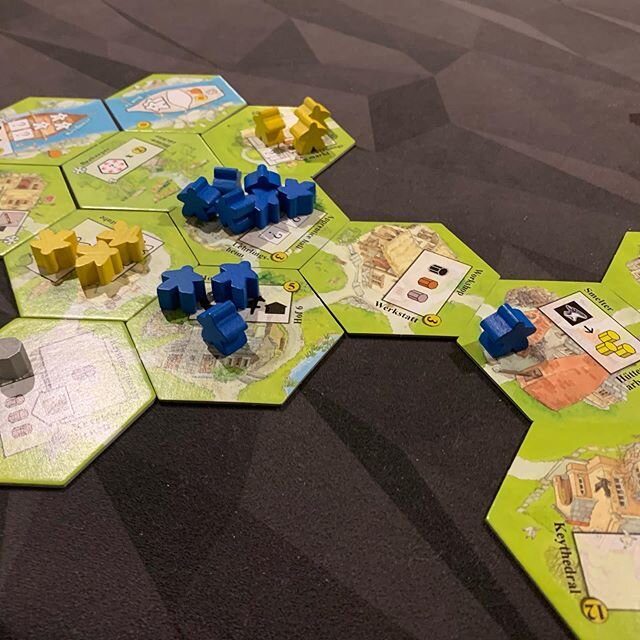
carccoverOn Z-Man's Facebook page, they've announced that: 1) The new version of Pandemic should be in stores now.

and

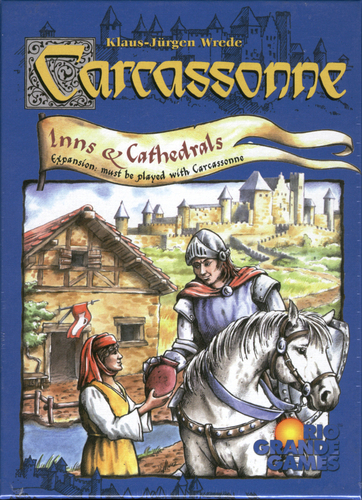
2) we'll see three reprints of Carcassonne expansions this month.

"In February, we will be releasing three Carcassonne titles:

Expansion 1: Inns & Cathedrals Expansion 2: Traders & Builders Expansion 3: The Princess & the Dragon"

If for some reason you've never played this great tile-laying game, be on the lookout for these expansions. It's a terrific nongamer game.

Thanks for reading, and check us out on Facebook and Twitter...

Wizkids Announces a New Quarriors Expansion

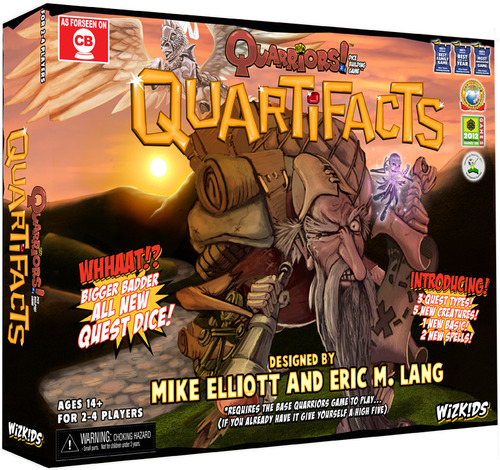
quartifactcoverAlright you dice-rolling fans...Wizkids has a new expansion on the way, and it looks fun, fun, fun. According to Wizkids, "In Quarriors! Quartifacts - the fourth expansion set for the Quarriors! dice-building game - all of Quaxos' magical items have gone missing and you, mighty Quarrior that you are, must take it upon yourself (with the help of your trusted Squire) to find them!

Quest cards are available in the Wilds for you to send your Creatures to capture the all-new LARGER Quest dice that wield unimaginable power. (No, seriously, we have no idea what these things do.) Quarriors! Quartifacts includes five new Creatures and two new Spells, in addition to a new Basic card (the Squire), twelve Quest cards, and six Quest dice."

Image from BGG user gladpanda

So it comes with bigger dice (!), and some pics from the Nurnberg Toy Fair show that they're including a non-winding score track, too. Now if we could just get them to include some decent individual players boards...

At any rate, we're excited to hear about this, and when we get a chance to give a whirl, we'll let you know what we think.

Thanks for reading, and as always you can find and even "Like" us on Facebook. And over on Twitter too!

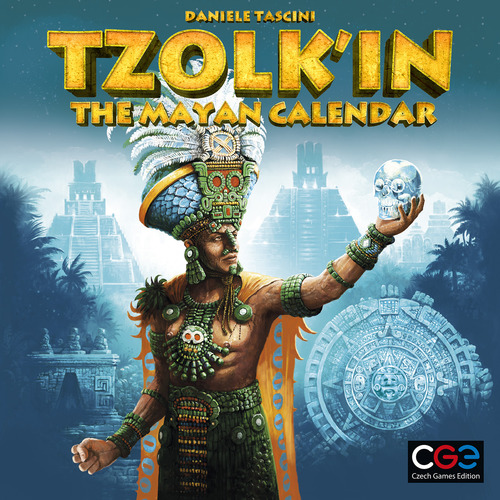
Gears of Whoa!—A Tzolk'in Review

Mayancover By Firestone

One of the most buzzed-about games of the last year was a little game called Tzolk'in. But it seemed like the interest might be simply because of the cool gears that cover most of the board. Well I've played it now, and I can assure you, there's a solid game to go with those cool gears.

The game is set in Central America during the time of the Mayans, and you're trying to earn the most VPs through careful placement of your workers. There's a large, ornate gear in the middle, and five smaller gears around that one. The large one acts as the game's "timer" It will turn once around, and then the game ends, while the smaller ones will turn many times over the course of that large gear's one turn. Science! There are also a few tracks—including a tech tree and three temple tracks. And there are spaces for buildings and monuments, which you'll buy with resources. The game crams a remarkable amount of information onto one board without becoming Gearsoverwhelming.
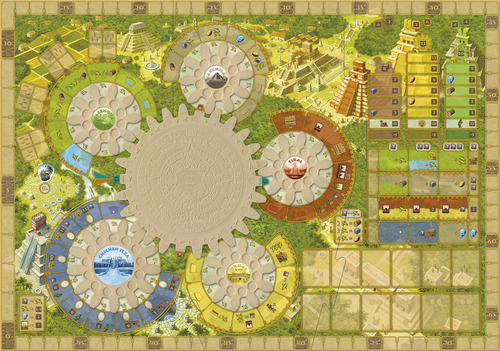
Turns are "simple": You will either place one or more workers onto the board, or you will take one or more workers off the board.

Each of the gears has spaces for the workers to sit on, and each gear has different actions around them. You have to place your worker on the lowest available space on each wheel, and possibly pay to do that. The spaces start at zero corn (the game's currency), and go up from there. So you have to pay corn to place your worker (unless it's on the lowest space, which is free), but you also have to pay for each worker you place beyond the first one each turn. And the prices ramp up for each worker, so you always have to carefully consider whether you can afford to place workers.

At the end of each turn, you turn the big gear, which turns the little gears, which move the workers on those gears. So each turn a worker will move ahead and be in front of a new action space. The spaces get better the further along the gear you go, but because you have to either place workers or take them off, it can be a tricky thing to get workers to ride that gear for a while.

board

When you decide to take a worker off a gear, he gets to do the action that's in front of him when you take him off. (If you decide you actually want to do an action further back on the gear—because something on the board changed, or you timed the taking off/putting on poorly, or whatever—you can, but you have to pay one corn for each space behind you that action happens to be.) One of the gears has actions that let you take corn or wood. One lets you get building resources, such as wood, gold, stone, or crystal skulls. The third gear has actions that let you advance the tech tree, build Buildings, and build Monuments. The fourth gear lets you do things such as pay corn to advance on the Temple track, get another worker to use in the game, and build a Building using corn rather than resources. The last couple of spaces on every gear allow you to take a earlier action on the gear, but without having to play the extra corn. The fifth gear is a little different, in that those spaces give you straight VPs and let you advance on the Temple track. The further on the wheel, the more VPs, but each space costs one crystal skull, so once someone has claimed a space with their skull, no one else can use that one.

skullgear

As if all of that weren't enough, I still have way more stuff to explain!

There's a space where you can put a worker down to claim the first player marker. Each turn where no one does that, you put corn on the wheel. So as the corn adds up turn over turn, there's incentive for other people to grab that first player space.

So there are three Temple tracks. Since you're Mayans, and Mayans believed in many gods, you'll be trying to win the favor of the gods and advance on these tracks. It's not like there's a Sacrifice A Villager space—it's completely abstracted. You take an action on one of the wheels, and move your marker up the ziggurat. That gets you more VPs during scoring, and a couple of spaces give you resources, too. There is a mechanism in the game where you can beg for corn if you can't pay for something, but this "angers the gods"—which simply means you have to move down one of the tracks. It's not the focus of the game, and there's nothing that made me feel I was being asked to worship anything—it's just one of the game's mechanisms given a thematic coat of paint.

The tech trees let you do things such as gather extra corn when you take the Gather Corn action; get extra wood, stone, or gold when you gather that resource, or get resources when you build a Building—plus a few others. The tech trees are cool, but as with so many great games, you can't do everything, so you have to choose wisely, and hope your choices are better than your opponents' choices.

Image from BGG user henk.rolleman

Finally, there are two tracks on the bottom of the board. One holds Buildings; at any time there will be six of them on the board. They let you do things, such as move up on a tech tree, or move up on Temple tracks, or spend less to feed your workers at the end of each turn. There are two batches of Buildings; you use the first ones in the first half, and switch to the second batch for the second half—and the second batch has better Buildings. Another reason to build Buildings is that some of the Monuments will give you VPs for having certain-colored Buildings.

The game comes with a number of Monuments, and each game you'll use exactly six of them. Those—unlike Buildings—won't be refilled. They give you bonuses and VPs at the end of the game, but you have to build them using resources, just like a Building.

The game is divided into four quarters, and at each quarter you'll have to feed your workers—two corn each unless you've built a farm Building. Unlike Stone Age, starving your people here is a BAD IDEA. Also depending on the quarter, you might score some of the Temples, or get some resources. After the last quarter, you count up VPs, add in bonuses from the board or from Monuments, do a couple of other fiddly things, and whoever has the most VPs, wins!

Whew! Well that's it. As you can see, there is a LOT going on. Your first game will probably take you a while, because even though you can only take off or put on workers, there is a lot to think about. This game is all about timing. You'll constantly be trying to figure out whether putting these guys down this turn will allow you to take that action later to get this resource to later turn into that Building provided your dude on that gear can ride far enough along to get to the Building action. This is NOT a light game...

Image from BGG user Goodsound

One the great things about the game is that there are many things that change the experience from game to game. The Monuments are different each game, for one. Another thing is the starting resources. The game comes with tiles that have various bonuses on them, such as a free movement up one of the tech tracks, or another worker to start the game with, or a free skull, or moving up the Temple tracks. You get four tiles, and you choose two of them to start the game with. That will often determine what route you take (at least at the start). Your experience from game to game should be quite different. And because there are so many viable routes to victory, you'll feel complete freedom to explore a different strategy from game to game.

You'll need to determine if the Temple tracks are enough to keep you away from the game. Again, it's completely abstracted, but there is talk of "pleasing the gods" to move up, or "displeasing the gods" and having to move down. You're not sacrificing people to these gods, or worshiping them in any way. But we'd understand if that makes you uncomfortable.

This is one of the best games I've played in the past year. I can't wait to try out some new tactics and strategies—and I REALLY can't wait to get my grubby hands on a copy of the game, and paint those sweet gears. If you like deep games, and/or worker-placement games, check out Tzolk'in. It's way more that a gimmick.


More Kingdom Builder on the Way

CrossroadsQueen Games has provided some previews of the games they'll have at the upcoming Spielwarenmesse...the toy and game fair in Nürnberg, Germany. Probably the biggest news is that they're unveiling a new expansion for the Spiel des Jahres winner Kingdom Builder—Kingdom Builder: Crossroads "New locations and new challenges are what the land needs! Kingdom Builder: Crossroads includes four new landscapes with two different location spaces to offer new options to shape the kingdom. The task cards challenge players to build their settlements in a certain way in order to gain even more gold at the end of the game."

Not much to go on, but for Donald X and Kingdom Builder fans, it'll be an instant buy.

In related news, Queen is coming out with a Big Box version of Kingdom Builders, set to release in October. It'll have the base game and all current expansions—including the Nomads and Crossroads expansions, and the Capitol and Caves mini expansions

What You Missed...

gimliAnother week come and gone. Thanks for joining us for it... We started off with a preview of the new Presidential Meeples for Pixel Lincoln.

Then we got news of a Princess Bride game coming from the folks at Game Salute.

We gave a last-minute plea for the elephant racing game Formula E—and it successfully funded, by the hair on its trunky-trunk-trunk...

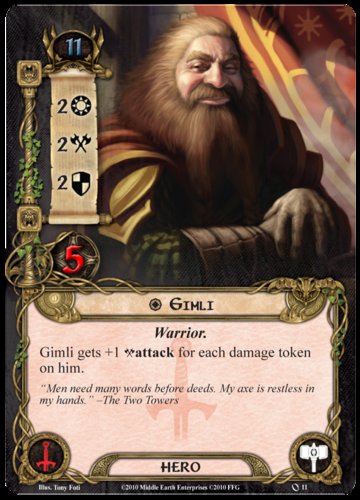
Then we reviewed one of our favorite games: The Lord of the Rings The Card Game. We also used the word funnest.

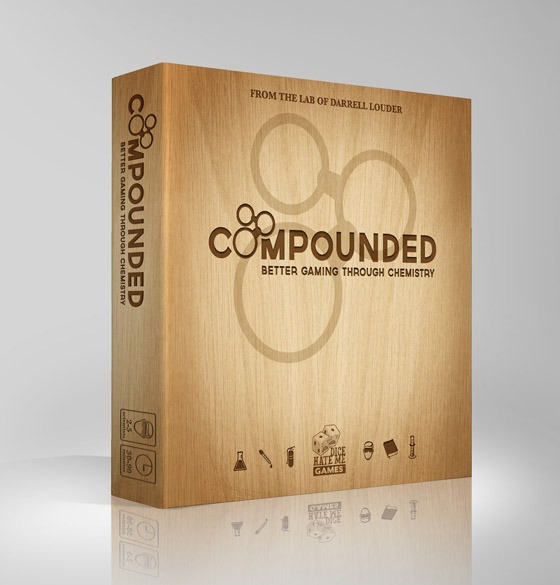
Then we interviewed Darrell Louder about his new game Compounded—and that was also our Kickstarter Weekly feature...

skulls

And finally, we told you about the next couple of months in Rio Grande Games' schedule. Lets hope it holds!

Monday we reveal our favorite games of 2012, so make sure you come back! Here's a clue for one of the games. ------->

Thanks so much for reading, and don’t forget to like us on Facebook, and follow us on Twitter!

A Big Rio Grande Games Release Update

GoblinsThis week Rio Grande Game posted a release update on their Facebook page. Unfortunately, it looks like Race For the Galaxy: Alien Artifacts has been pushed from two months ago to sometime this spring. Oh well...there are a BUNCH of games to play until then. "December and January have seen the release of several new games from Rio Grande Games. The games we have released are Monster Factory, Power Grid: Northern Europe/UK, Cavemen, A Fool’s Fortune, Spin Monkeys, Tzolk’in, Goblins, Inc, Galaxy Trucker: Another Big Expansion, Galaxy Trucker: Anniversary Edition, Copycat, Unexpected Treasures, Maria, The Doge Ship, Myrmes, and Antike:Duellum.

We have several other new games in the pipeline which we plan to release in February. These include Cinque Terre, Piñata (a rethemed version of Balloon Cup by Stephen Glenn) and Arctic Scavengers.

Later this spring we plan to release Credit Mobilier, Mogul, Dominion:The Guilds, and Race for the Galaxy: Alien Artifacts. We also have planned several reprints for the spring:El Caballero, Tikal, Space Alert, and Space Alert: New Frontier."

I (Firestone) played Tzolk'in on Tuesday, and it was AMAZING. We'll have a full review up next week.

Thanks for reading, and as always you can find and even "Like" us on Facebook. And over on Twitter too!


Compounded—Kickstarter Weekly

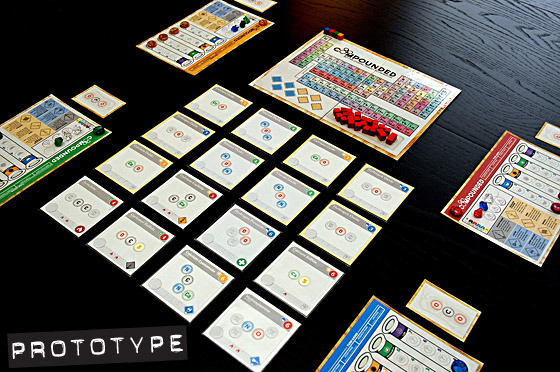
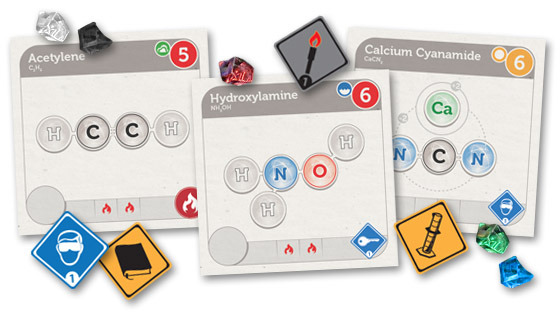
a9139fd6a72c5a9a688c060af796a10b_largeWell if you were here yesterday, you know a little bit about this week's featured Kickstarter campaign. The folks at Dice Hate Me have found another diamond in the rough and they are in the midst of yet another successful campaign. Compounded boasts "better gaming through chemistry"—it's a game of gathering elements, and compounding them to create...well, compounds. Players are scientists who are sharing a lab, and a limited amount of resources, elements, and lab tools, as they try to finish more compounds and score more points. For more about Compounded the game, you can check out our interview with designer Darrell Louder by clicking this underlined text.

3f02dfd9bc972191bc76408bf908999e_largeCompounded is already funded and has blown past the first stretch goal! You can do your part and pitch in $8 for a couple of snazzy buttons to add to your flair. Or for $42 you can get yourself a copy of the game and all the applicable stretch goals. You can check out the campaign right here.

Thanks for reading, and as always you can find and even "Like" us on Facebook. And over on Twitter too!

Compounded—An Interview with Designer Darrell Louder

a9139fd6a72c5a9a688c060af796a10b_largeToday's interview is a preview to tomorrow's Kickstarter Weekly. We're chatting with Darrell Louder, the designer of Dice Hate Me's Compounded, which is chugging right along on Kickstarter. Hey Darrell! Thanks so much for taking a few minutes to sit down and give us the answers that inquiring minds want to know!

First let’s start off by having you tell us a little bit about yourself. My name is Darrell Louder (yes, last name is my birth name.) I’m a 33-year-old graphic & Web designer—I guess game designer now as well. Father to a handsome 2-year-old named Ethan, and husband to the greatest woman in the world, Lesley. I work for Game Salute as their Web site administrator and a member of their graphic design team. I also tend to do freelance design for a few people when the need arises.

Compounded is your first game design that's getting published; is this your first ever attempt at a game design, or have you been beating down doors trying to get published for a while? Compounded is my first game, period. I never had the desire to make a game before, as I was totally content playing the games that my friends would bring over. Compounded only came about because my friend John Moller started a ‘revolution’ called the Unpublished Game Festival, now known as Unpub (http://www.unpub.net), in 2011. Four days prior to the event, I was concerned he wasn’t going to have enough game designers in attendance, so I made Compounded. It was received pretty decently, and I was urged to continue working on it—so I did. I kept working on it that year, bringing it out every now and then to playtest, but that was it. It never left my hands or our play group.

So...a game about science; how did you land on that? Are you a science geek, or did it just sound like an interesting premise for a game? Well, this is a funny story. Initially Compounded was going to be about mad-scientist alchemy. Same mechanics, but instead of Hydrogen, Oxygen, and the lot, it was rat tails, snakes, etc. Before I built it out though, my wife questioned it. She pretty much said to be original, and that the alchemist track would be "white noise." She is an AP English teacher at the local high school here, so she immediately recommended using real compounds and elements. That was it. It was one of those EUREKA moments! My grandfather was a zoologist, so I was raised knowing about science and nature. So there was no questioning it; I had enough info from my childhood and schooling to get started on it. Add in a bit of research and BAM! It was just a perfect marriage of ideas and my childhood.

How long have you been playing games like this? And what made you want to design one of your own? I had been playing a little game known as Magic: The Gathering for about 15+ years. So I shunned all other games, as I was one of the ignorant Magic players that thought all other games were cheap and stupid. Turns out, I was the cheap and stupid one. I gave in one day and tried Reiner Knizia's Lord of the Rings, and I was hooked. Then came Catan, Carcassonne, and the usual lot. I still stuck with Magic, but my eyes were opened to the entire hobby of gaming. As I said above, I only designed a game for Unpub. Before that, I had no desire to do it, as I thought all others have done well enough.

a71da75228cceb9cf8b446084569305b_large Tell us how you ended up with Dice Hate Me. Then in the fall of 2011, John took it down to North Carolina with him (at my request) to playtest it with Chris and Cherilyn of Dice Hate Me Games. Now, this wasn’t to pitch the game to them; this was just for feedback. I had made friends with Chris and Cherilyn over the course of a few months through Twitter. They have very similar game likes and dislikes that I do, so I thought their advice on gameplay would be helpful. I honestly wasn’t looking for publication—heck, the game was only 6 months old! So anywho, John came back with the game and suggestions from them. I did those changes and liked the improvement of the game. So I ran with that for 6 more months to Unpub2. Chris and Cherilyn came up for the event (this was the first time I met them in person), and within 30 minutes of meeting them they asked for the rights to publish Compounded. So, really, I got incredibly lucky. My path is incredibly rare, and I am incredibly thankful for them for making my first design so easy!

Who is your favorite scientist—living, dead, real or imaginary... Wow, great question. Knee-jerk I have to say my Grandfather (Darrell Louder Sr.) but you probably mean famous, so I have to go with Michael Faraday. He's known as the grandfather of science, and is credited for giving so much to the field.

Give us your top 3 games and why you like them so much. Wow, this is a tough one. What do I base the three off of, games with lots of players, games with small players, different mechanics, there are many directions on this. Hmm... I’ll side with games that I get the most excited for when they are on the table. In no particular order:

  • Alien Frontiers
  • Stone Age
  • Road to Canterbury

What are some of the benefits gaming provides us? What are some of the downsides? Brain food. Gaming is problem solving and strategy practice. My wife is trying to bring gaming into the classrooms because of this very reason. Sure to dive into our level of gaming is like jumping into the deep end of a pool with only the doggy-paddle to survive on. But once you get a few down you can swim laps. So I think (and I would love to see a study on this) that gaming actually increases your brain power, social awareness, and makes you look better. Okay...maybe not the last one, but one can dream. :) The downside, beside the dreaded gamer-stink (seriously, SHOWER when at conventions) I would say distractions. I get distracted a lot wanting to play a game or work on a design. So I have to fight that urge to get my job done first.

Yes, friends don't let friends leave the house with gamer-stink... Wanna give us a spoiler on the third stretch goal for Compounded? What can I say. Let me say this: Chris and Cherilyn (of Dice Hate Me Games) care first and foremost about the quality of the games they put out. So the first thing you’ll notice with this KickStarter campaign is that there are no "KickStarter Exclusives," and there are no bags, mouse pads, coats, cars—everything goes 100% toward the game and making the game components the absolute best they can be. The third stretch goal will continue that trend, and will be great. Out of all the goals, I can honestly say the third one is the one I am most excited for, and the one I really want to see become a reality.

Ok, here’s the One-Word Answer section: Answer the next 5 questions with only 1 word or phrase.

Favorite Muppet? Grover

Last Vacation destination? Outer Banks - Kitty Hawk, NC

If you could own a REAL ship from Star Wars, which one would it be? A-Wing

Yes or no, have you ever gone around banging two empty halves of coconuts together? Yes, very much so. I ain’t ashamed of it either.

Apollo or Starbuck? Neither. Not a Battlestar fan, sorry.

Darrell thanks so much for taking time to tell us about Compounded!

You can find Darrell on Twitter at @GetLouder, and you can check out Compounded on Dice Hate Me's site right here and the Geek right here. And come back tomorrow for more about the Compounded Kickstarter Campaign!

And don't forget to like us on Facebook, and follow us on Twitter! Thanks again for reading!

The Lord of the Rings: The Card Game—A Review

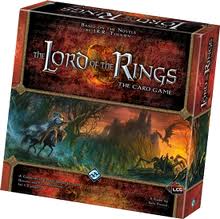
By Jeremiah Lord of the Rings the Card GameWell, we've certainly done our share of gushing over this game, but we've never actually given it our full, in-depth review. Until now. If you've never played a living card game (LCG) before, know this: The rules are deep and complex, and they're very similar to a collectible card game (CCG)—the biggest difference between the two is market collectibility. A CCG is distributed through starter decks and booster packs that randomly give you the cards of a 200-300 card set. An LCG releases the complete set in an expansion, so you're not trying to buy pack after pack after pack to get that one awesome card. You know exactly what you're getting in every pack, and my pack is going be the same pack you get.

The Lord of the Rings: The Card Game, which I will refer to as LOTR from here on out, delivers what everyone would want in a CCG, but puts it in a co-operative format. It's quite simply one of the funnest card games (LCG or CCG) I have ever put my hands on!

The Core set of the game includes a starter deck of 4 spheres of influence (you'll see more about that later), several sets of encounter cards, 3 quest decks, 2 threat counters and all the various tokens you will need (progress, wound and resource).

The game is designed for 2 players...or is it? With the purchase of a second core set you can expand to 4, and the design actually scales very well for anywhere from 1-4 players (yes, you can play a solo version!). Players each control three heroes which come from 4 different "spheres of influence" in Middle Earth: tactics, spirit, lore, and leadership. As with any LCG or CCG, deck customization plays a big part in terms of your success or failure.  I won't go into the ins and outs of deckbuilding here. I will say that there is a group of 4-6 of us who play together, and we've all sort of taken ownership of our own sphere, and we all play with mono-sphere decks. It has its advantages and its disadvantages, but it's seemed to work for us for the time being.

Because the game is co-op the player turn is set up slightly differently than a standard card game. Instead of each player going through the different phases of a turn, completing their turn and then play moving on to the next player, players in turn walk through each phase of a turn or round. For instance, after the refresh phase in which players give each hero a resource token (money) and draw a card and pass the "first player" marker to the left, players start the planning phase. Whoever was just passed the first player marker now plays cards from their hand, paying the appropriate resources to do so. These are typically items or allies to add to your party. But instead of moving on to the quest phase, the next player then performs their planning phase, and so on. During each phase players are encouraged to discuss their strategies and what they are doing, making it one big team effort. You're not supposed to reveal exactly which card you're holding in your hand but you can definitely talk about the abilities that card will give you, or your teammates.

So we're all in this together...well then what are we up against? Aside from each players' deck, there are two other decks involved in the game. A quest deck, and an encounter deck.

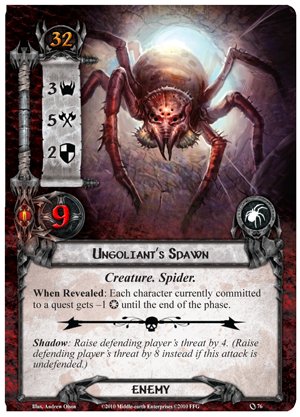
spiderThe Encounter Deck—It's full of baddies, locations, and other stuff that you will have to encounter during the game. Defeating enemies is not how you win the game, but they can certainly be the reason you lose the game! Traveling to locations can earn you certain bonuses or penalties depending on where you are going.

The Quest Deck—This deck is usually only 3 cards, though sometimes more and sometimes less. It tells you how you win the game, and sometimes gives you alternative loss conditions as well. It also tells you which cards go into the encounter deck, which often gives you a clue as to how hard, or what type of quest, it's going to be.

Typically to successfully complete a quest you have to place an amount of progress tokens on the currently active card of the quest deck. And often fulfill some other condition. So... How does one place a progress token on the quest deck? I'm glad you asked.

The two most crucial phases of the game are the quest phase and the encounter phase.

The Quest Phase—Players must decide whether to commit their heroes and allies to the quest; if they do, they exhaust that character, and turn the card on its side (just like tapping in Magic The Gathering). This means that the character cannot attack or defend any baddies coming out until the next turn. But their "will" is committed to the quest and cancels out an equivalent amount of threat in the staging area (which is where the bad guys live after they come out of the encounter deck, and before they attack). After the last player has committed characters to the quest, out comes one encounter card per player in the game. Each of these cards have a threat level on them which adds to the threat in the staging area. AFTER these cards are revealed, if the total amount of committed will is greater than the threat, then players place progress tokens on the quest (or active location they have traveled to) in the amount of the difference. If not, then each player increases their threat level by the difference on their threat counters. (Hitting 50 on your counter signifies the end of the game for you!) Okay, take a breath. Still with me? Good.

gimliThe Encounter Phase—Things get hairier in the encounter phase. Players can choose to engage any of the bad guys in the staging area, or let them engage you later. It's often helpful if someone is primed for fighting to have them engage a tougher opponent so they don't beat on your friend who isn't ready to face such a battle. Each decision piles up on the next, because there are mechanisms in place that will cause enemies to engage players based on your threat counter. And, if you have all of your characters committed to the quest, you're taking damage points that get turned into even more increases on your threat level. Things can snowball really, really quickly.

That, believe it or not, is a very rough overview of the game play. I told you. It's deep, complicated, and meticulous. But it is so fun!

This is not a casual party game; it's not even for the casual gamer—every decision, every card played, choosing whether to commit, to defend, to attack, everything, can make or break the success of the quest.

The storyline continues through the release of Adventure Packs, each of which includes a quest deck, usually a set of encounter cards, some new player cards to continue spicing up your deck, and setup instructions (often using several encounter sets from the core set). I love this aspect of it; it's like playing an RPG without having one person specified as the game master who has to put in hours of prep time before everyone else gets to play. For $15 you get a new quest and can have yourself a great evening. The down side is that rarely after we beat a quest do we go back and play it again. (Although there are plenty of them that took us more than one attempt!) And because of the monthly pace that Fantasy Flight maintains in releasing these packs, I'm a good $100+ behind in my chapter packs!

Final thoughts and my rating—I was introduced to "gaming through a couple different CCG-type games, so this title hits home for me. And it provides many nice twists to what is usually a head-to-head genre. The game is complex, but that complexity gives it a platform to build and expand on continuously, and also gives great great depth to the gameplay. The cards all have great synergy, not only within each sphere, but cross-sphere, making each quest a true team effort, which is something I've come to really enjoy about the game. And the Tolkien theme is icing on the cake. I give this one a 10.

Thanks so much for reading, and don’t forget to like us on Facebook, and follow us on Twitter!

A Last-Minute Plea for Formula E!

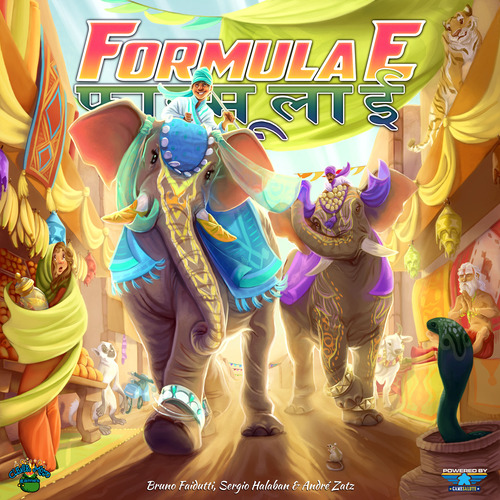
FormulaEA few weeks ago we told you about a racing game from Game Salute and Clever Mojo games called Formula E. Well, with 6 hours to go on the Kickstarter campaign, they're only $3000 away from funding the game! "You've got games about car races, boat races, bicycle races, sled dog races, and even ostrich races, but there's one type of racing that's missing–Elephant Races! Formula E is here to fill that gap. FORMULA E has a double sided game board–one track is for 3 & 4 players, and the other is for 5 & 6 players. There are six colorful Elephant Meeples included with colors that 'should' be tinted correctly for colorblind friendliness. There are ten Holy Cow Meeples that start the game scattered around the track but can be moved to create obstacles for your competitors. Then there is the Mouse Meeple, which you can use to scare elephants into backing up. As you might guess, there's a lot of 'screwage' potential in a game of FORMULA E–and I haven't even mentioned the Cobras and Monkey's yet!"

So if you're on the fence, make up your mind and consider hopping on board. It looks like a fun little racing game—and racing games are great choices for nongamers and families.