Fantasy Flight Announces the First Adventure for Star Wars: Edge of the Empire

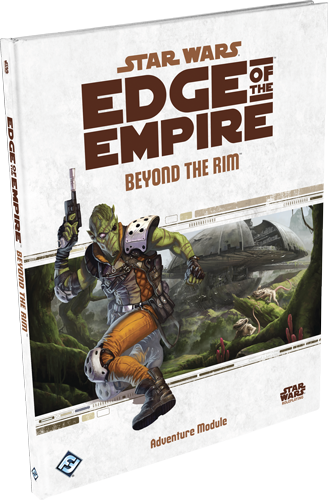
SWE05-book-leftWe don't normally talk much about RPGs here on ToG, but...STAR WARS! Anyway, Fantasy Flight rebooted the Star Wars RPG last year, with the Edge of the Empire game. and now they've announced the first full-length adventure: Beyond The Rim. The new adventure "is a full-length adventure in three acts that carries players from the bustling, hub-and-spoke space station known as the Wheel all the way to the surface of a deadly jungle planet at the edge of Wild Space. In this epic tale of exploration, your characters will seek fame, fortune, and opportunities to repay old debts. You’ll dodge Imperials, explore distant worlds, run into rival parties, confront new adversaries, and uncover decades-old secrets from the Clone Wars. The ninety-six pages of Beyond the Rim contain enough material to make veterans out of new characters, or heroes out of veterans, and optional hooks for extended campaigns allow GMs to make further use of the book’s fleshed-out setting and NPCs."

I (Firestone) have been interested in this, since I think my kids would enjoy RPGing in the Star Wars universe—once they're old enough, that is. Has anyone played this yet? Is it fun? Let us know in the comments!

Thanks for reading! And make sure you check back next week, when we'll have an interview with one of my comedic heroes! Here's your clue: Rowsdower!

Origins: A Week in Preview

OriginsLogo Well, next week the Origins Game Fair will descend upon the greater Columbus area, along with thousands of gamers of all types: tabletop, RPGers, and yes, even the LARPers will be there in force, providing many great photo opportunities.

Scott lives 2 time zones away and is unable to make the journey, so I (Jeremiah) will be heading down with a few friends who are going to help me cover the vast expanses of the convention...in one day.

This is our first large con that we will be covering and we're pretty excited about the opportunity. And I've been lining up meetings with designers, and publishers this week.

Here's a few items we'll be covering:

New Games—We'll be scouring the con for new and exciting (and yet-to-be-discovered) titles, both in the exhibit hall and at the Unpub events.

Video Interviews and Demos—If all goes as planned, you'll see my smiling face alongside those of the people who bring you the games we love—and, they'll be teaching you about their newest/most-popular titles!

Tons of Social Media Entries—If I'm excited about something, I'll burn it up with Instagram, Twitter, and Facebook action. It will be like you're ACTUALLY there!

Plus more. We're still working on what we'll be able to cover, but we'd love to hear from you about what you'd like to see. Is there something you're excited about, or sad that you'll be missing out on? I'll try my best to cover as much as I can! Thanks so much for reading, and be sure to subscribe to our email list on the right.

And follow us in the social media world of Twitter, FaceBook and Instagram!

FrogFlip—A Double-Take Review

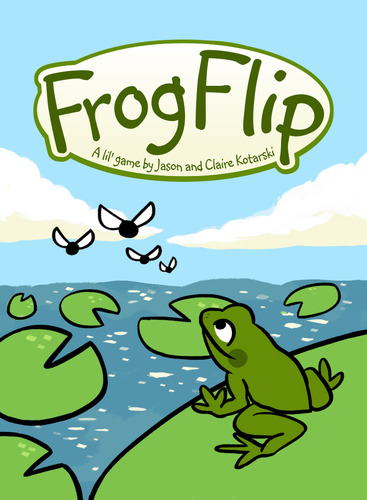
FrogcoverJason Kotarski is a busy guy. He's a husband, and a dad, and a church planter, and a musician, and a game designer. His first published game—The Great Heartland Hauling Company—is a cool pick-up-and-deliver game. He was kind enough to let us interview him, too. He's got a new little 2-player card game in the works, and we're going to give you our impressions of FrogFlip. Components

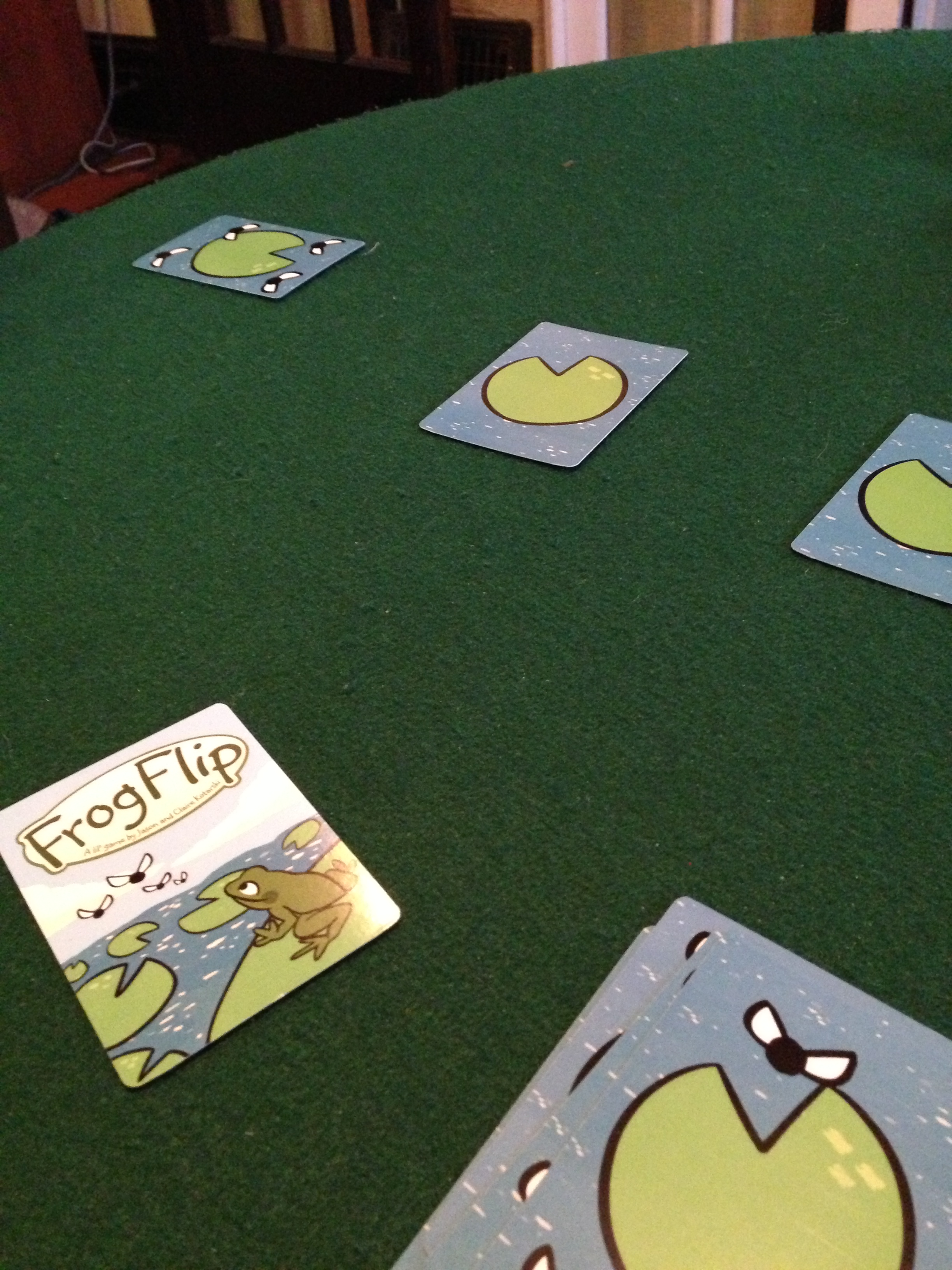
14 Cards, which include two cards with instructions, four Lily Pad cards, and eight Bug Score cards.

1 Frog Disc, which is a plastic disc with a frog sticker on one side.

Setup

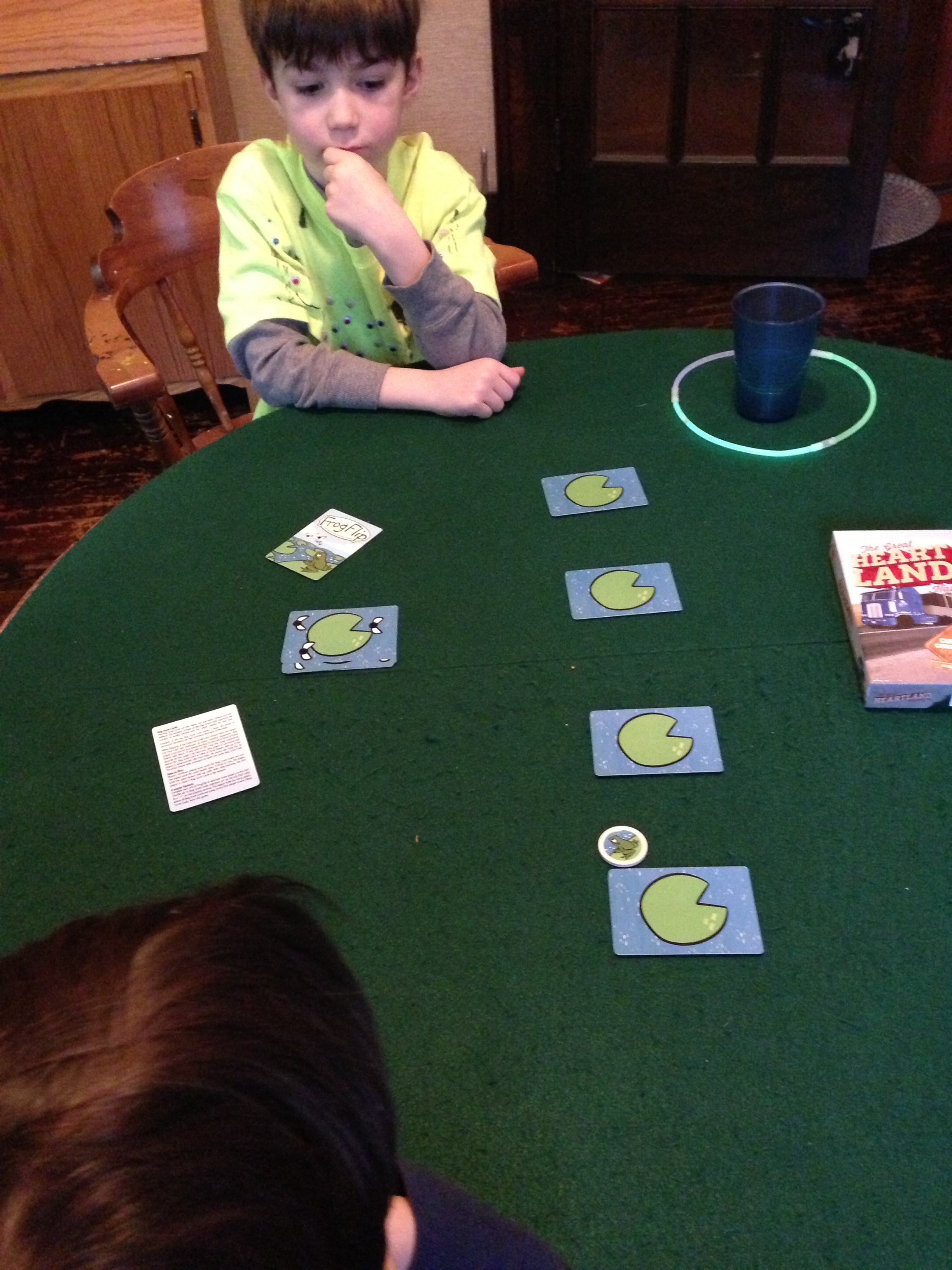
Take the four Lily Pad cards and place them equally spaced between the two players. Then shuffle Bug Score cards and place them flower-side-down on the side. Then the youngest player grabs the frog disc and starts.

Gameplay

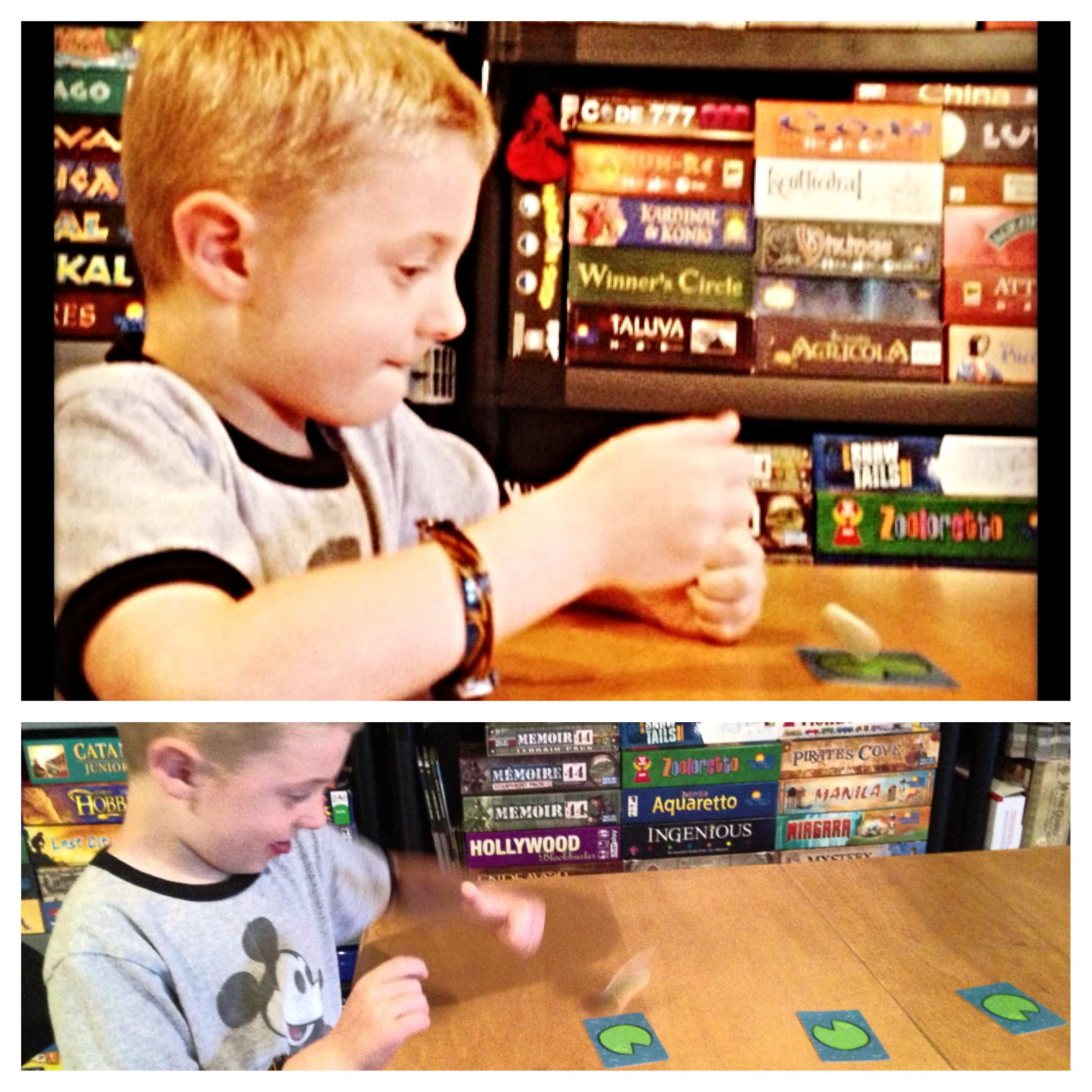
photo (13)Each of the Bug Score cards has a number of bugs on it—either one, two, three, or four of them. On their turn, each player will attempt to flip the frog to the Lily Pad card that corresponds to the number of bugs on the top card of the Bug Score stack. So if there are two bugs on the top card, I'm trying to flip the frog onto the Lily Pad card that's two away from me. If I miss, my opponent is trying to flip the frog onto the Lily Pad card that's two away from her.

You flip the frog just as you would with flip a coin.

Your hand can't pass the first Lily Pad card, and if the frog falls off the table, your opponent gets two turns in a row!

The frog only has to touch the Lily Pad card in order to count; you get to take the Bug Score card, and the number of bugs on it is your score. If you manage to get any part of the frog disc to rest on the correct Lily card, you get to take the Bug Score card and flip it onto the flower side—the score is the same, but flowers are tie-breakers.

You continue back and forth until either the deck runs out, or someone claims five of the eight Score cards. Whichever player has the most bugs on their score cards wins, and flowers break ties.

photo (16)Recommendations

Family? Definitely! It's just the right depth for a quick game with the kids. The only downside is that it's only for two players—though there are rules for a 4-player variant that requires two sets of the game.

Youth group/party game? Probably not! It looks like a kids game, so I don't think teenagers would like this much. And since it's two-players-only, I'm unlikely to even try this at a party.

Gamers game? Mmmmaybe! If your group likes Flowerfall, and other quick-playing, small fillers, this might be a good one to throw into the bin. But I'd probably still just pull out Flowerfall, though...

The Verdict

Firestone—This is yet another example of someone creating a "micro-game"—one that's fully contained in a very small package. I like that trend, as it keeps the price down and the portability high.

Jeremiah - Agreed, the brevity of the game is a highlight too; we can play best of 3, 5, 7, and so on, depending on how close it is to bedtime when we start playing. And my boys can teach it to others (friends, grandparents, etc) without my help. They really like it when that happens!

Firestone—The 5-year-old loves it, and the fact that the frog only has to touch the card means he has a chance. My 8-year-old likes it, but he's sadly getting to the age where he'd rather play deeper stuff. But he does love playing with his younger brother, so we'll see how long that lasts.

Getting that frog where you want it isn't as easy as it sounds! There were plenty of times it would go off in some crazy direction—and I've had years of coin-flipping experience! I think this adds to the fun, though, as it keeps kids competitive with grown-ups, who have obviously inflated opinions of their frog-flipping abilities.

Jeremiah - I feel like we're in the same boat. Frog Flip is definitely going to hit closer to home for the 4 or 5-year-old range; the novelty of the coin flip is still a draw to the older kids. The flipping mechanic seems to level the playing nicely, and the theme ties in perfectly with the game play.

picstitchFirestone's Final Verdict—This is an adorable little family game. I fear it has a very short window where it will continue to interest my boys, but I'll happily play it until that window closes.

Jeremiah's Final Verdict— This is a fun little game, and it did give me the opportunity to teach my boys how to properly flip a coin. (I guess that's a skill I've neglected to teach them in my parenting.) The boys had fun with it, and like I said, it's a great length for the times we don't have time to play a lengthy game before bedtime. My oldest is advancing into games like Heroclix and Pokemon so I, like Scott, don't know how long this will hold his attention, but it's still right in my youngest's wheelhouse and he loves it!

Jason just announced this week that the game's been picked up by Michael Fox's Sprocket Games. Watch for a Kickstarter campaign in July—and we'll try to get Jason to sit down for another interview. Thanks for reading!

Theology Of Games would like to thank Jason for providing us with review copies of FrogFlip; this in no way affected our opinions of the game.

Princes of the Dragon Throne—A Review

photo (10)- By Jeremiah Clever Mojo Games has, along with designer Fred MacKenzie, put together a large-scale board gaming experience that is truly unique...while somehow familiar.

In Princes of the Dragon Throne players assume the role of one of the overlooked princes of the recently deceased Dragon King in the land of Lo'en. Beginning with a small amount of loyal followers you'll attempt to gather resources, persuade prospects to join your forces, and earn favor of the guilds throughout the kingdoms. Which prince among you and your siblings will rise to power and take the throne? Only time will tell.

The Components

The game comes with oodles of game bits, cards, and a huge game board. To be more specific there are:

216 custom miniatures - 80 Supporters - 60 Dragon Lords - 4 Dragon Princes - 72 King's Guards

179 Punchboard Chips - 84 Guild and Score Markers - 95 Resource Chips

157 Cards - 36 Dragon Prospects - 36 Citizen Prospects - 40 Starter Deck cards (4 decks of 10) - 36 Guild Favors - 6 Clan Favors - 2 Deck Title Cards - 1 Bargain With the Giant card

4 Player Aid Sheets

2 Custom Sorcery Dice

1- 22" x 33" Game Board

And of course the Rule Book

There is no apparent sign of either a partridge or a pear tree.

Setup and Overview
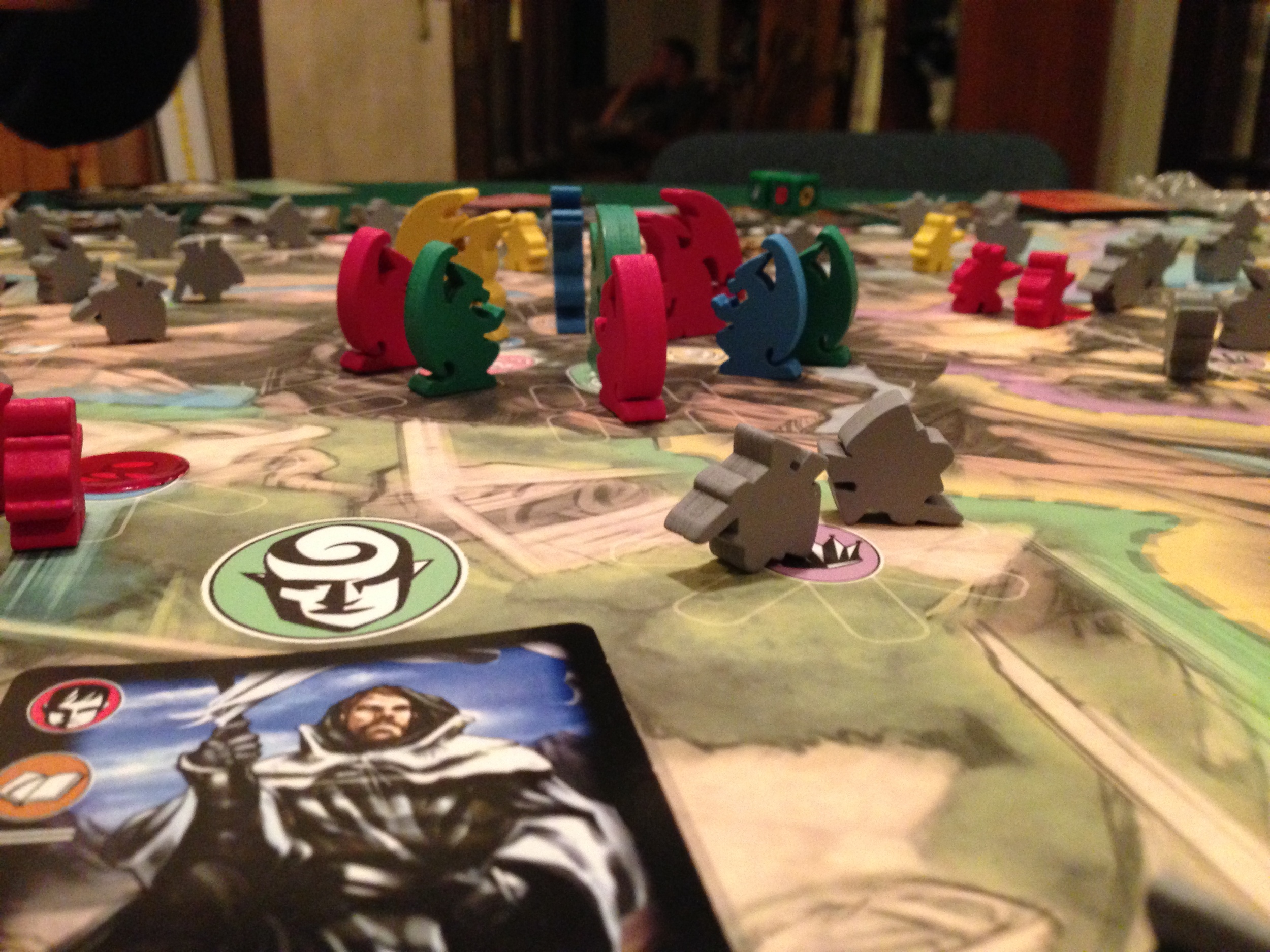
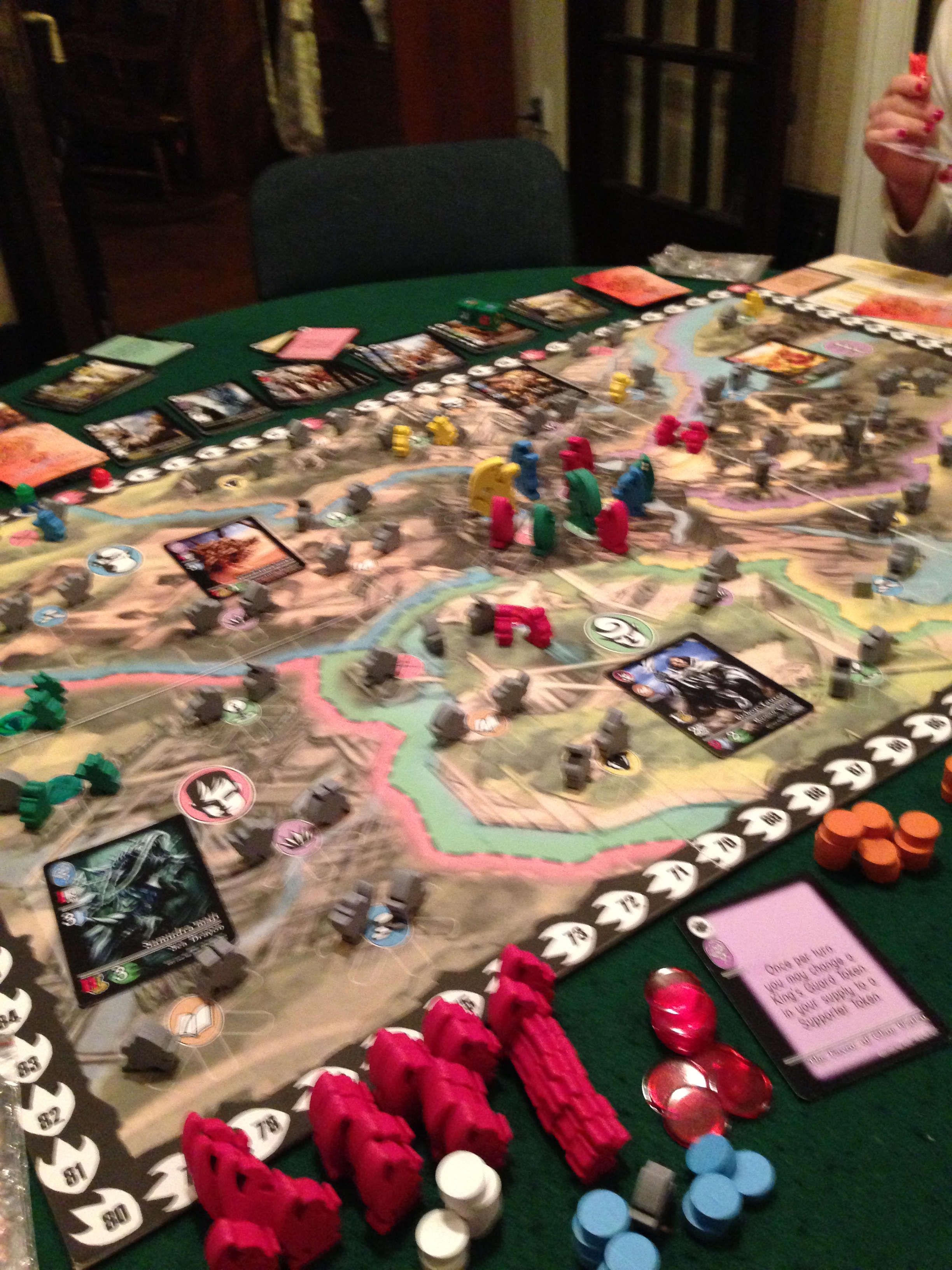
photo (9)The board is separated into 6 kingdoms (Humans, Elves, Sorcerers, etc.); each kingdom is made up of 6 guilds (Merchants, Shepherds, Warriors, etc.). There is also a space for a prospect card (either dragon or citizen) in each kingdom. Surrounding each guild in every kingdom are 5 slots for Supporters or King's Guards. To setup the game: - Place 2 King's Guards in every guild (this will use all of them). - Give each player their starting deck of 10 cards. - Take 3 Dragon and 3 Citizen prospect cards, shuffle them, and place one in each kingdom. - Give each player three of each resource type (Gold, Sheep and Influence). - Each player then takes 5 of their Supporters (placing the rest to the side for now),all of their Dragon Lords, and their Dragon Prince.

Players shuffle their starting deck, draw five cards, and the game begins.

There are lots of stacks of cards, and resources, and so forth, so the bigger the table the better!

photo (8)

Game Play On a player's turn he or she can perform one of a possible four main actions, and a number of additional "King's Guard Actions," provided they have a King's Guard to use.

The four main actions are as follows:

Gather Resources—All the cards have two main functions, and gathering resources is one of those. On their turn players can play up to three cards from their hand and gather the amount of resources listed on them from the pool. If there are none left in the pool, you start pillaging them from other players, taking one at a time from each player moving counter-clockwise.

Recruit a Prospect—Once you've gathered enough resources, you can then begin to recruit prospects from the game board, by paying the value listed at the very bottom of the cards available. When you recruit that card, you snag another Supporter from your reserve pile; you also potentially score points (if there is a claw icon next to the cost). And if that wasn't enough, you get to remove a card from your hand or discard pile from the game!

Deploy Supporters—You can deploy up to 2 Supporters a turn, using two different cards from your hand. A Citizen card will give you two icons, which offers more flexibility; you can play a Supporter either in the matching Kingdom, on any guild, or on any matching guild in any Kingdom. Dragon supporters are locked into one Kingdom, on any guild, but they remove a King's Guard from the guild they are placed in (which goes into your reserve for later). Dragons also require you to feed them a number of sheep from your resources when you deploy them. You also can't deploy them where there are no King's Guards...

Maneuver Supporters—Finally if you choose to maneuver Supporters, you can move up to two of your Supporters from anywhere on the board to anywhere else on the board. This is great for taking over guilds, but also leaves guilds open for being taken over by other players... Speaking of taking over guilds...

If at any time you have more Supporters than any other player (or King's Guard) in a guild, you gain control of that guild. You get to place a spiffy token on it, score two points, and gain a guild favor card into your deck to use one time (and then it goes back into the general supply of guild favor cards). And you get to place one of your Dragon Lords into one of the houses around the Dragon Throne (either matching the color of the kingdom or guild that you just took control of).

After (or before) you've done one of those four main actions you can also use a King's Guard action (as many times as you like... provided you have a King's Guard to use).

The King's Guards that you gain by deploying Dragon Supporters allow you to do a few things. - Place 2 new prospects (if you don't like any that are out there). - Place 1 prospect card back on the top of a stack (if someone covered up one that you like). - Discard any number of cards (you still don't get to draw back up until the end of your turn, but it gets you through your deck faster).

You may also play one, and only one, Guild Favor card during your turn.

When your turn is over, draw back up to five cards (if you've played any) and the next player begins their turn by placing new prospects from either the Dragon deck, or the Citizen deck (their choice) if there are any empty slots, and then they proceed to take their turn.

Parliament—One last feature of the game is Parliament. Whenever a player's scorekeeper passes a red spot on the score track (at 6, 13, 21 etc.) parliament is held and players take turns placing their Dragon Prince in a house (starting with the player in last place). Each house has its own house bonus, which will give the player a special edge, or action, on their turn. When the next number is reached you do it all again.

The Goal and Game End—The goal is simply to score more points than everyone else; the game ends when all the spots in the Houses around the Dragon Throne are filled.
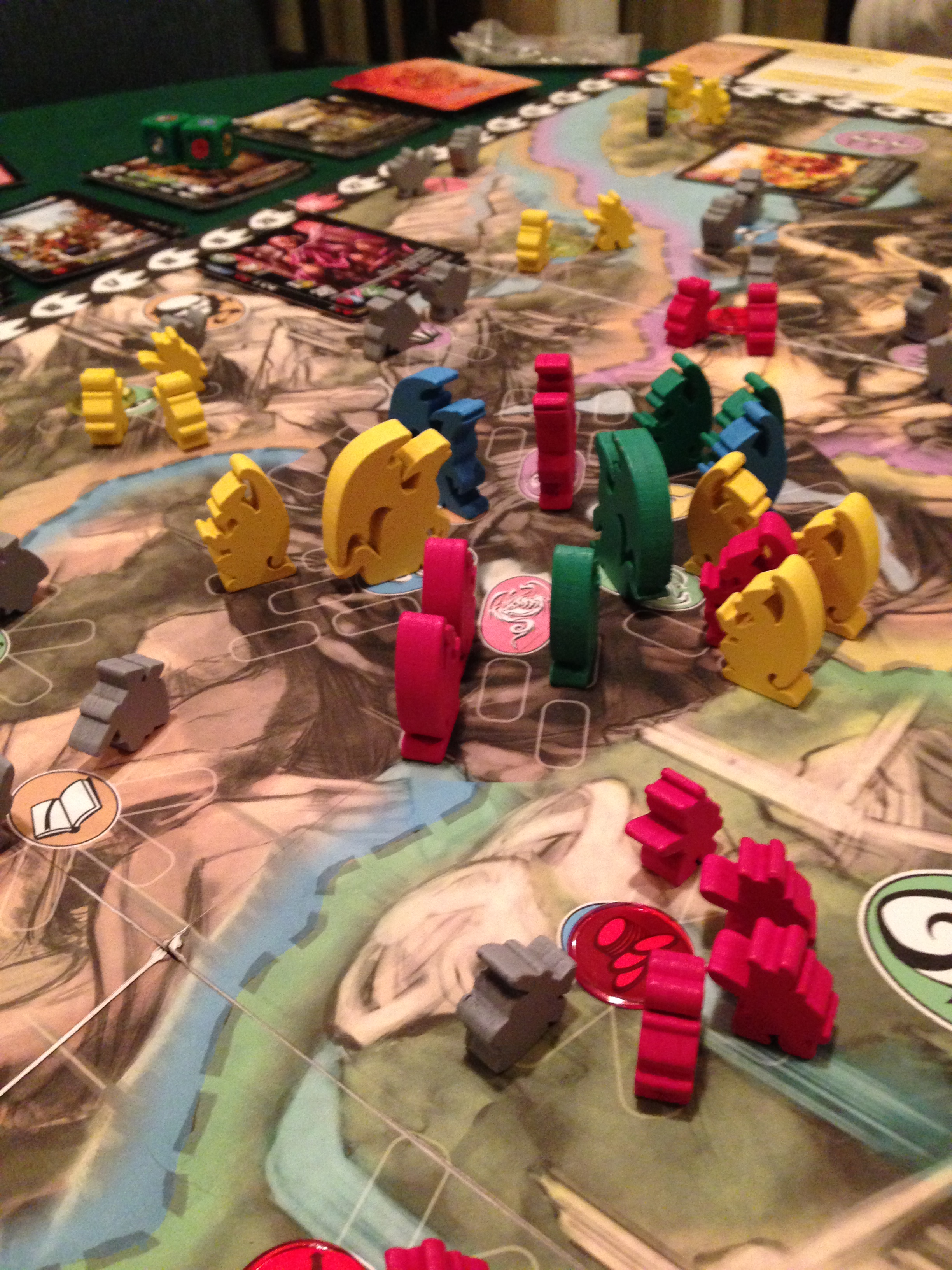
photo (11)Thoughts and Recommendations -

Family/Party Game? Uhmmm about that. No. The game isn't hard to learn, but there are tons of aspects to grasp before even beginning to strategize. This one is not for the kids.

Youth Group Game? Not really. The setup is lengthy, the gameplay is lengthier (about 2 hours, once you've learned the game), and it doesn't lend itself to a big group setting.

Gamer's Game? Absolutely! This may be the very definition of a Gamer's Game! Intricately woven mechanics, rich back-story, and tons of pieces-parts—the more I learned about the game the more I loved it!

Components—I can't really speak to the final quality of the components; I was sent a prototype of the game with good ol' fashioned wooden meeples. But I will say this: Even the "rough draft" style of the meeples was pretty fantastic, and the renderings of the finished minis look splendid! Clever Mojo is going all out for this one, folks!

Gameplay—There's a lot to take in. I've played with 2 players and with 4 players, and if you're in a 4-player game it can get a little sluggish if folks don't plan ahead. That being said, there are a ton of different decisions to make on each turn; just choosing which of the four main actions you're going to take can be a painstaking process! "Do I buy up that card before someone else does, or do I deploy Supporters while I've got this dragon in my hand, or do I save up resources so I can get that awesome dragon??" There's a ton of planning and a ton of decisions to make on each turn, so be ready to make threats of bodily harm to those who are lagging behind.

If I had any small complaint about the way the game plays, I'd have to say I don't know how well I like the Maneuver Supporters action. It seemed a little too free, with being able to (in a Risk-like fashion) move your Supporters around and conquer guilds. Yes, there was a risk (pun intended) to getting that reward, but I felt it could have used a little tweaking.

Artwork—Again, what I had my hands on was a prototype, and I don't know how close to final everything was. But the cards already looked fantastic—lots of great detailed illustrations, and not one was like the other. Each Dragon and Citizen featured a name and a bit of flavor text; a lot of work went into the thematic realm the game is placed in. Beautifully done.

Overall—With elements of deck-building, worker-placement, and area-control—and finding a great balance and synergy between the three, while throwing in a pinch of resource management—Princes of the Dragon Throne combines the best of your favorite game genres into a large-scale board game. Simply put: It's epic!

We'd like to thank Clever Mojo Games and Game Salute for loaning Jeremiah a prototype of the game; this had no effect on the content of this review.

If you'd like to back Princes of the Dragon Throne on Kickstarter, you can do so here.

Have you backed it already? Let us know!

We get ever-so-excited when folks sign up to get our posts via email, right over there, on the right!

Also you can find all kinds of Theology of Games goodness on Facebook, Twitter and Instagram! Check back soon as we interview Fred Mackenzie and his brother David Mackenzie, the brains behind Clever Mojo, Game Salute, and Princes of the Dragon Throne! Coming tomorrow! (June 5, 2013!)


Kickstarter Weekly--June 3, 2013

Well we're starting another week here at TOG, and we've got another bundle of Kickstarter news to leave on your doorstep, including some sneak preview action, and the looming suspicions of a campaign that may not see fulfillment. But let's start with some happy news

Princes of the Dragon Throne - Clever Mojo Games

photo (11)Fred Mackenzie has spent the last three years developing this epic, large-scale board game, and Clever Mojo Games, along with Game Salute's Springboard division, have finally launched the campaign to bring this gem to market. I (Jeremiah) have played a prototype of the game, and trust me: You're going to want in on this! The only downside is the $100 pledge it will take to get a copy of the game. Check out all the details here. And be on the look out for our full review next week!

SnowdoniaSnowdonia - Indie Boards & Cards

The same publisher who brought The Resistance to the people has successfully funded this new worker placement board game. A pledge of $54 gets you a copy of the game which is a discount over the $70 MSRP once it hits shelves. Check out the full details here.

epic death box

Epic Death - Waits in Graves Games/Game Salute

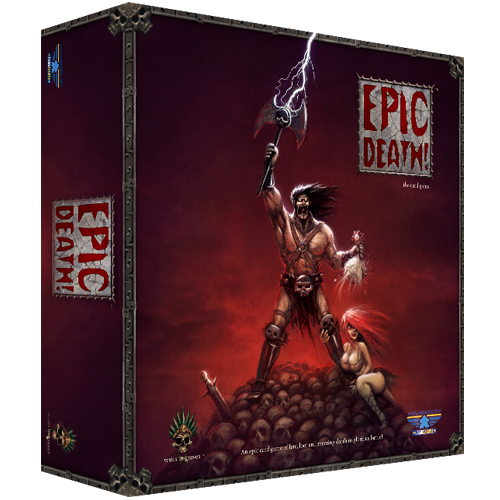
We told you about this campaign a few weeks ago. The title will be funded, blowing past the initial goal, and with 11 days left they're just a shade over $2,000 from hitting the final two stretch goals, and unlocking some epic custom dice. Again, $35 gets you a copy of the game. Right here is where you'll find the details of the campaign. Stay tuned for our full review coming soon!

Sneak peek!

Ancient Terrible Things - Coming soon to Kickstarter!

Ancient Terrible Things - Pleasant Company/Game Salute (Do those guys every sleep?)

Can't say much about this game just yet, but it is a press-your-luck dice roller set in a pulp-horror universe. Expect it to hit Kickstarter soon, and again check back for our full review!

Odins RavensAnd finally, as we reported last week, there is still no sign of Works LTD, who successfully campaigned for funds to release a second edition of Odin's Ravens. We've heard that Kickstarter has reached out to Works LTD after many backers have expressed concern, and we will be keeping an eye on things and let you know as soon as anything develops.

Thanks so much for reading. Are you backing any of these? Let us know! Are you backing anything we should know about? Sound off in the comments! As always, we'd love it if you would subscribe to the blog over on the right ----> And don't forget the buckets of fun being had on our Facebook, Twitter, and Instagram pages!

Have Odin's Ravens Flown the Coop?

Odins RavensA few months ago we featured "Odin's Ravens Second Edition" in a Kickstarter Weekly piece. The campaign was created by Works LTD. who has seen success with one other game campaign, and a few less-than-successful campaigns with some audio/recording gear.

The campaign closed on March 5, 2013 and reached pledges of over $22k. The date provided by Works LTD. to get the game to market is sometime in August of 2013. But a growing number of backers have become concerned because Works LTD. hasn't given any further updates since March 5th when they announced the successful funding of the campaign.

We're not suggesting Works LTD. took the money and headed for Mexico, never to be seen again. But what we really know right now is, well...nothing, and that's what the hub-bub is about. No, the game isn't past delivery date, and there wasn't a "Dear John" note left on the backers' doorsteps. But there haven't been any signs of life coming from Works LTD; it's like they've gone all Willy Wonka and disappeared. Seth—the guy behind Works hasn't logged onto the Geek since March, they haven't tweeted since March.

We all understand that life can happen, and I, for one, certainly hope that nothing tragic has befallen anyone within the ranks of Works LTD; but in the world of 2013, with all of our connected-ness and technological doo-dads, it certainly seems that the easy and professional thing to do is to shoot a quick update to your backers and put their minds at ease.

Here's hoping the ravens haven't flown the coop, and that Works LTD will update backers soon!

Did you back this game? Sound off: On a scale of 1-10, how worried are you that you're not getting your game?

Thanks for reading, please help us out by subscribing to the blog on the right ---->
And for more fun check us out on Facebook, Twitter, and Instagram!

The State of Euphoria—An Interview With Jamey Stegmaier

Box FinalOne of our earliest interviews here at Theology Of Games was with Jamey Stegmaier, and we’re privileged to have another chance to talk with him as he’s halfway through his latest Kickstarter project: Euphoria.

Jamey, thanks for talking with us. First, how are things going with Viticulture now that it’s in people’s hands?

Hey guys, thanks for having me back. It’s been a pleasure reading your blog over the last 9 months. As of this writing, Viticulture has an 8.12 rating on BGG, so that’s definitely a great start. Of course, it’s about much more than a rating—it’s about creating memorable, fun, sometimes nail-biting moments around the table with friends and family. From what I’ve heard, we’re definitely achieving that goal so far.

I (Firestone) have had a chance to play the finished Viticulture now, and it's definitely a solid game. Well done.

What are some of the lessons you learned through your Viticulture Kickstarter campaign?

A LOT. :) In fact, I’ve been writing a series of Kickstarter Lessons on the Stonemaier Games blog over the last four months to help other project creators learn from my mistakes and insights. Here’s a small tidbit that I don’t think I’ve mentioned elsewhere: If you’re making a board game in China (or anywhere), just because it’s on the boat does not mean the boat is leaving. The boat doesn’t leave until it’s full. To extrapolate that to Kickstarter, don’t tell backers that something will happen. Tell the things that have happened. Otherwise you’re going to run into some frustrating delays that require backtracking.

How do you feel about already successful game companies (and Hollywood, now!) using Kickstarter to finance projects?

Nice topical question! You know, I’m all for any Kickstarter project that builds community and relationships. I’m against any Kickstarter project that is all about the money, whether it’s a $500 project from Local Artist Guy/Gal or a $5 million project from a celebrity. But if you’re building something together with people, I’m all for it.

OracleYou recently launched a Kickstarter for your new game: Euphoria. Can you tell us about the game?

Euphoria is a dice worker-placement game set in a dystopian world. The numbers on your dice represent their knowledge, which has varying impacts on the game depending on your special abilities (on recruit cards) and the other dice that have already been placed on the board. It’s a meaty game with a lot of replayability. If you like Alien Frontiers, Tzolk’in, and The Manhattan Project, you’ll like Euphoria.

So what’s the “hook”—the thing that’s going to make Euphoria different from other worker-placement games?

I’d say that element of knowledge is one of the big hooks of the game. The numbers on your dice thematically and mechanically mean something, and yet there’s very little luck in the game. The other aspect is the flow of the game. There are no rounds and phases, no seasonal upkeep costs or anything like that. Once the game begins, it doesn’t stop unless someone has to get up to go to the bathroom (which doesn’t happen often because the game plays in almost exactly 15 minutes per player once everyone knows how to play).

Why did you choose a dystopian theme?

I really, really love dystopian fiction. Ready Player One, The Giver, The Hunger Games, Children of Men...I think the theme has always been in the back of my mind. But what really brought it to life was something that happened during the creation of Viticulture. I was playtesting the game last year when I stopped to think about who the little workers were. They had no personality—they did whatever I wanted them to do without complaint, blissfully unaware of their bleak existence. And it hit me: Every worker placement game is a dystopia. And thus the idea was born.

Why do you think people are so draw to dystopian themes in literature and film?

I think we see a lot of ourselves and our society in dystopian fiction, but to the extreme. That often makes for really interesting fiction. I personally love the element of discovery in dystopian literature. How does the world work in the future? What caused such drastic changes? What can we learn from the extremes presented in the book?

Registry of Personal SecretsWe're so glad you hit the stretch goal that gets us those cool steampunk dice—those are awesome!

Thanks! I’ve played the game with the samples a few time, and for some reason they’re just way better than normal dice, even though they’re functionally the same.

You mentioned that this game “incorporates mechanical elements” from The Resistance. WHA?! (That’s our excited way of asking: “What, pray tell, does that mean, exactly?”)

Before you get too excited, let me explain. :) The comparison is that just like in The Resistance, you don’t know whom you’re aligned with in Euphoria, and there is some amount of bluffing to make people think you are someone you’re not. Basically, each player starts the game with an active recruit and a hidden recruit. The hidden recruit could be one of any of the factions in the game, and you activate that recruit by reaching certain thresholds in the game that can be triggered by any player. Thus at any point, you might be helping another player unlock their hidden recruit without realizing the folly of your ways. It is different than The Resistance, but I think there is definitely a common bond there.

I love the artwork for the game—so many games these days seem indistinguishable from one another, but that certainly isn’t true of Euphoria. How closely did you work with artist Jacqui Davis to drive the aesthetic?

Jacqui is really fantastic. Basically, I told her the story of the world of Euphoria, and she took it from there. She created a unique style for each of the factions, both in terms of architecture and clothing. I can’t speak highly enough of her visual creativity.

Your press release mentions you playtested the game with more than 60 people. How do you know when you should let someone’s opinion affect your game—how did you decide what input to listen to and what input to ignore?

Well, let me clarify that point: The game has been blind playtested (i.e., without me present) by over 60 people. They were all Viticulture backers who volunteered to help with Euphoria. I, of course, playtested the game tons of times with Alan and other local friends, but we’re not included in that 60+ number. I would say that I listened to all of the feedback, and then I’d try to get to the core of what they were saying. Sometimes it resulted in a mechanical tweak; other times it required a graphic-design change. And sometimes I didn’t do anything with the feedback. But I learned from everything they said, and I think the game significantly benefited from their input.

pic1653415_mdWhat are some things that changed from the original prototype?

Here are two specific examples:

  1. Retrieving workers is a big part of the game. On your turn you either place a worker OR retrieve any/all workers—you choose one, like in Tzolk’in. In Euphoria, you have a choice to feed your workers or not when you retrieve them. Feed them and you gain morale; don’t feed them and you lose morale. Simple enough. But I made it WAY too complicated early on. There was this big chart on the board that told you how much you had to feed each worker and how much morale you would gain or lose as a result...it was too much. So based on the feedback I received, I simplified it so that the number of workers you retrieved didn’t matter.

  2. The allegiance track improvements are a prime example of the value of blind playtesting. The allegiance track is essentially a tech track that any or all players can benefit from, depending on their active recruits. Once you reach certain tiers on the tech track, you unlock new bonuses. Again, simple enough. That is, if you designed the game. If you didn’t, the allegiance track bonuses were way too much to remember, and they were often forgotten. So we simplified the bonuses, added a new bonus that triggered at the end of a track, and added tokens to the game to help players to remember to take the bonuses.

I know you’ve got plenty on your plate as this campaign winds down, but are there any other games on the horizon that you can share?

I’m working on a few ideas for an 8-player game, and I always have Viticulture expansions on my mind. Alan is working on a Prohibition-themed game.

Oracle5 Questions with 1-Word (or Phrase) Answers:

  • Who’s your favorite comedian? Seinfeld

  • What’s your favorite line from Shakespeare? How beauteous mankind is! O brave new world. (The Tempest)

  • Have you read Kirinyaga by Mike Resnick? I haven’t! Should I?

You should! It’s a utopian novel—series of short stories, actually—that is one of my favorite books. It’s just beautiful.

  • What is your favorite Proverb? Proverbs 25:16. "If you find honey, eat just enough—too much of it, and you will vomit."

  • A strange old man with a kind face knocks on your door one day. When you answer, he takes his hat off, holds it gently against his chest, and says, “Jamey, you don’t know me, but I sure know you. I’ve been watching you for a long time now—since you were a boy, really—and I’ve decided to give you a gift...though you might think of it as a curse. For the next year, you can only eat one thing for lunch—the exact same thing. You can try to make or order something different, but it will always change into this thing. So I’m going to ask you a question, and then I’m going to walk away. You’ll see me again in 14 years, but not before then—so don’t try to find me. Now Jamey...what is that thing you want to eat every day for lunch for the next year?”

I have a strange temperament at lunch...if I don’t eat protein, I get woozy. So I’d have to ask the old man for shrimp tempura sushi. I don’t think I’ll ever get tired of that.

Jamey, thanks so much for answering these questions for us!

I (Firestone) was seriously impressed when I got my copy of Viticulture recently—Jamey knows how to run a Kickstarter campaign, and the presentation, bits, and aesthetic are top-notch. Many people in my game group thought the same thing—in fact, when they found out the guy who was in charge of the game we were playing had a new game on Kickstarter, a couple said they were now going to back it based on Viticulture's presentation.

With two weeks to go it's sitting at ~$135,000, so head on over and add yourself to the list of backers. And as always, thanks for reading!

What You Missed...

HanabiIt's been another busy week here at TOG! Here's a quick look at the week that was:

To start the week off we brought you some info on new expansions from games by Eagle/Gryphon and Cryptozoic.

Later in the week the Spiel des Jahres were announced.

Firestone warns us: Don't believe the hype about Love Letter.

And AEG's plans to keep the next Smash Up expansion under wraps were thwarted—but we didn't spill the beans! We just reported on it, post-spillage.

We'd also like to give you a heads up about a few things we have in the works!

We've got a TON of interviews in the works, including Paul Peterson, who will discuss that new Cthulhu Smash Up expansion. We'll also be chatting with Jamie Stegmaier, designer of Viticulture, about his latest Kickstarter campaign for Euphoria, and we'll check in with David and Fred Mackenzie of Clever Mojo Games about the epic board game Princes of the Dragon Throne! (And that's just for starters!)

Also be on the lookout for our newest delve into social media as we introduce out newest feature: The 6-Second Review via Vine! Don't wanna miss this!

Thanks so much for reading, we'd love it if you subscribed for our email list, and liked us on FaceBook and followed us on Twitter, Instagam and now Vine!

The Great Old Ones Won't Stay Hidden—A Cthulhu Smash Up Expansion!

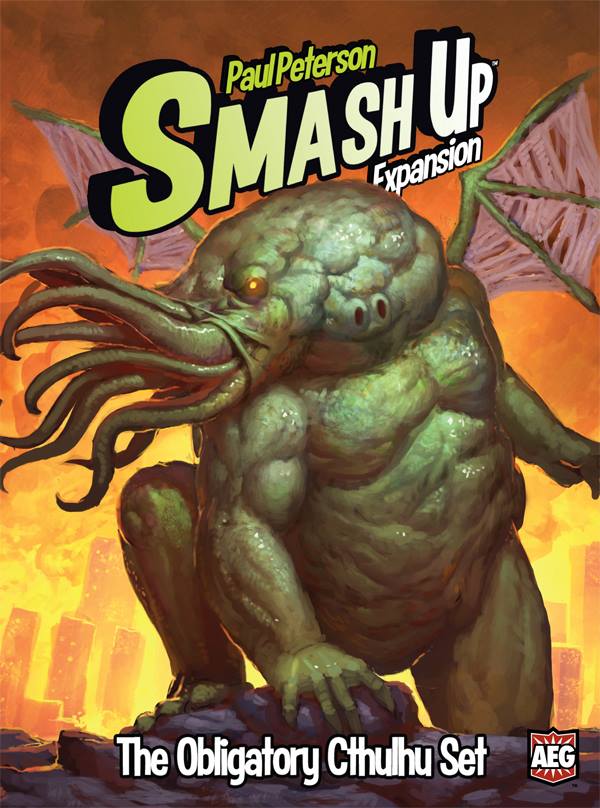
cthuluWell, AEG was hoping to keep the secret until June 1, but you know ancient evil: It just won't stay hidden! The Obligatory Cthulhu Set is the third expansion for the popular Smash Up game. According to AEG "this set features crazy Cthulhu cultists, fishy Innsmouth locals, horrifying Elder Things, and good old Miskatonic University members (the Fightin’ Cephalopods). To be certain we got it right, this set also includes a new card type fittingly known as “Madness”, that each of these groups use to various effects. But remember that Madness brings you power but at a price." Since this was outed earlier than they'd wanted, AEG doesn't have a page up or previews yet, but they promise more next week.

You can read our interview with designer Paul Peterson right here.

There are already some complaints in the Twitterverse that people aren't really excited about an expansion that's all under the same broad theme. What do you think? Let us know your thoughts in the comments!

Thanks for reading! Please follow us on Twitter, Facebook and Instagram!

Return To Sender—A Review of Love Letter

By Firestone LoveLetterCoverLove Letter had all sorts of buzz coming out of Essen. The game sold out quickly upon reaching the states, and for a time this $10 game was going for $40... So is it worth $40? Is it even worth $10? Let's find out!

Components

16 cards—these are eight different characters, numbered 1 through 8, and there are varying numbers of each of those...numbers. I just wrote "numbers" too many times.

1: Guard—There are five of these.

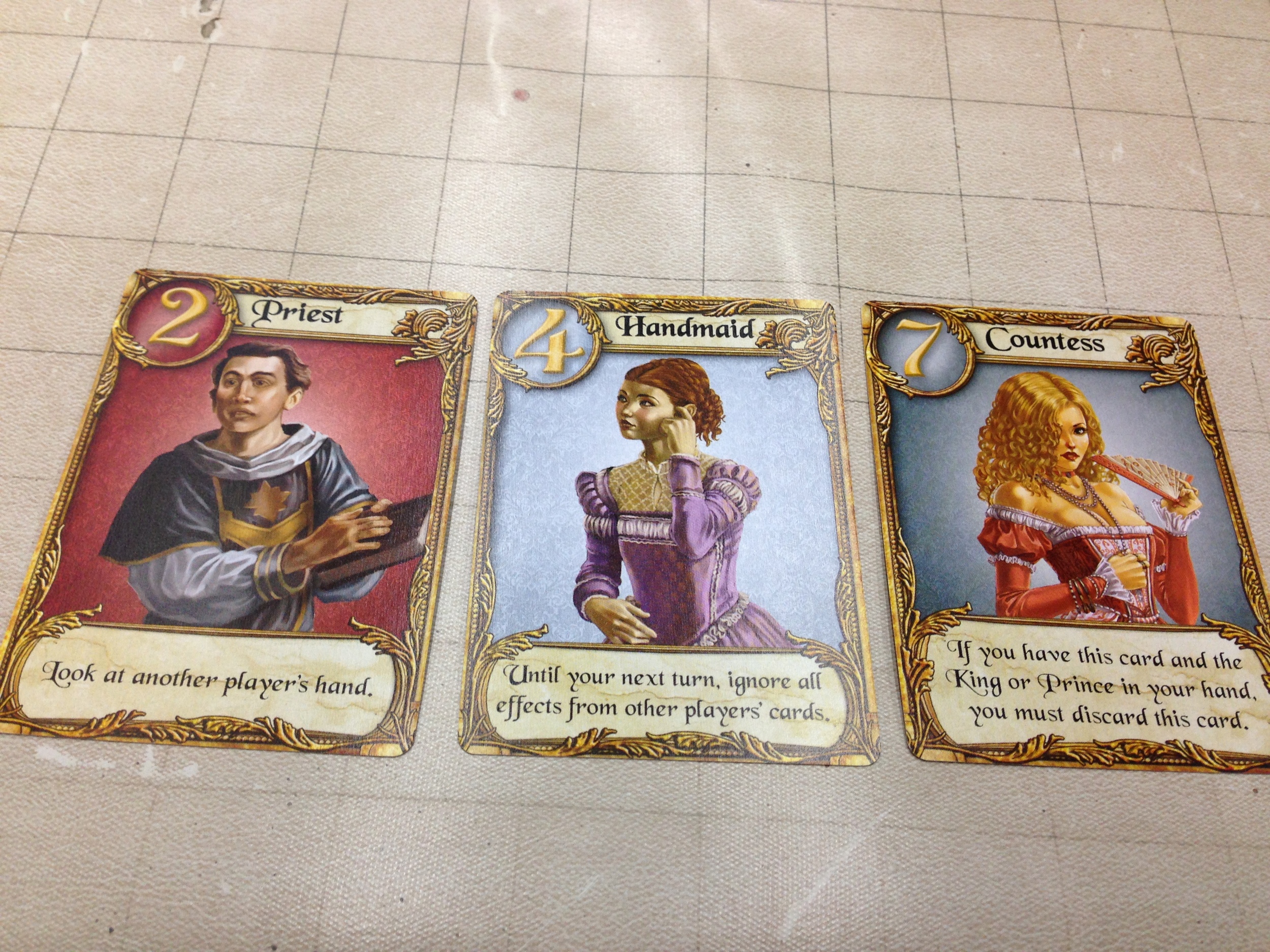
2: Priest—There are two of these.

3: Baron—There are two of these.

4: Handmaid—There are two of these.

5: Prince—There are two of these.

6: King—There's only one.

Bag7: Countess—There's only one.

8: Princess—There's only one.

Some red, wooden cubes

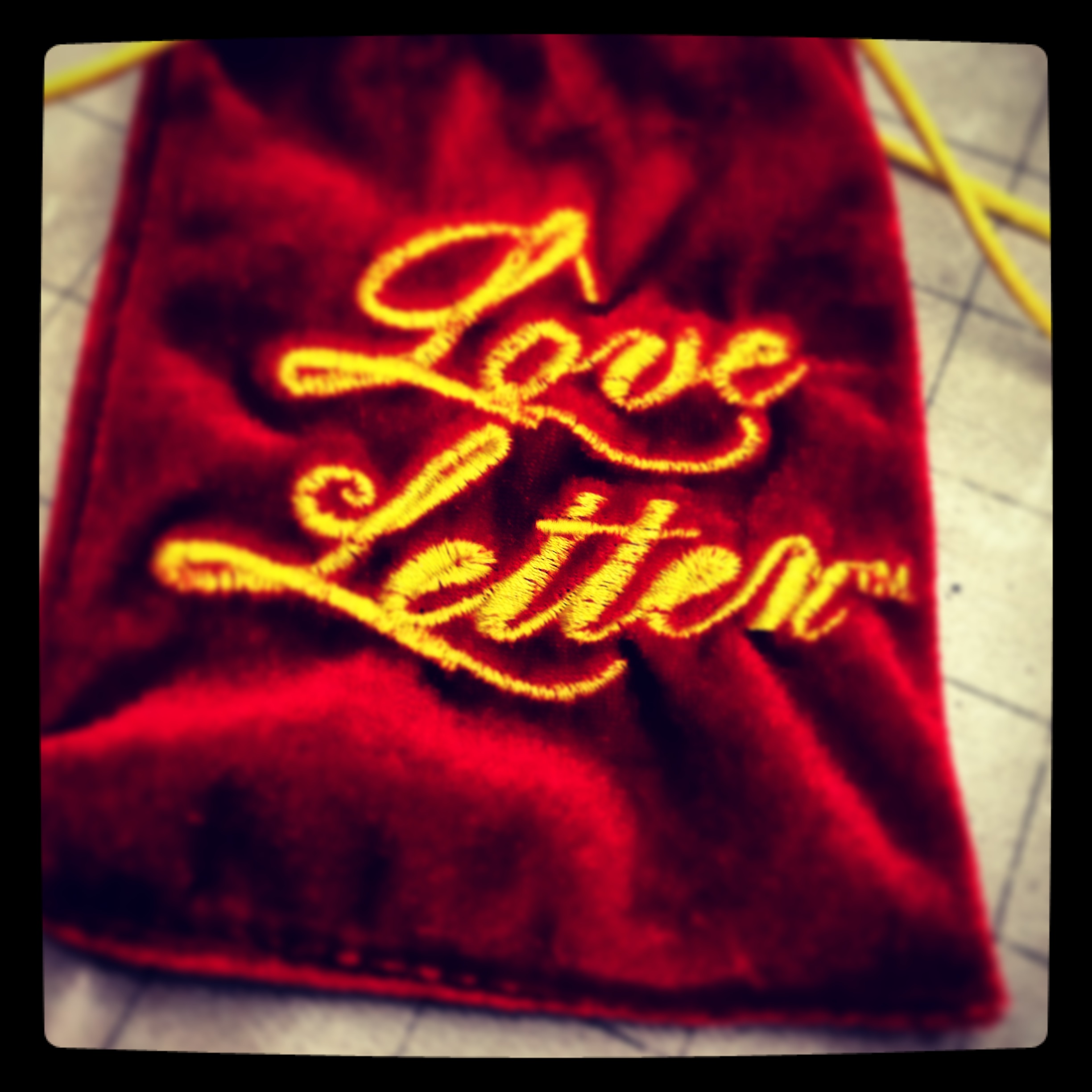
<---------And all of this comes in a small velvet carrying bag with "Love Letter" embroidered on it.

Setup

Shuffle the cards. Remove one facedown. Deal one card to each player and place the remaining cards in a draw pile. That's it.

Gameplay

The point of the game is to get your love letter to the princess. You do this by using the different members of the court to work for you. So on your turn you draw a card, and then play down in front of you one of the two cards you now have. When you play a card down, it stays down. And subsequently played cards are just played next to the old one. So you can always see what’s been played.

The actions on the card will often result in someone being eliminated—you or an opponent. The goal is to be the last person standing—or if the small deck runs out, you want to be left holding the highest-numbered card.

CardsThe Guard lets you pick another player and guess the card he or she has. If you're right, the person is out for the round. If you're wrong, nothing happens.

The Priest lets you look at the card of another player.

The Baron has you compare your remaining card (now that you've played the Baron down) with that of another player. Whoever has the lowest-value card is out of the round.

The Handmaid protects you for that turn—you can't be targeted by other players' cards in any way.

The Prince lets you pick a player—including yourself—and force that person to discard the card in his or her hand and draw a new one.

The King lets you trade hands with another player.

The Countess is a little odd: If you have the Countess and also have the Prince or King, you must discard the Countess. You can still discard the Countess at any time, and then people will think you've got the Prince or King.

The Princess makes you lose if you're forced to play or discard her.

CubesWhoever wins the round gets a red cube. The game ends when one player gets a certain number of cubes—which will vary depending on the number of players.

Recommendations

Youth Group Game? Maybe! It's light enough and fast enough that I do think this could work with a youth group (or a party setting)—though it does only play up to four players, so not too large a party... Usually the luck—which is high in this game—isn't a detriment in that sort of gathering.

Family Game! No! Okay, changed to Maybe! My kids aren't old enough to get the game yet, and I don't think my wife would like it. But your family dynamic might be different.

Gamer’s Game? Probably not! If your group is really, really okay with luck, this could work as a filler. But there are so many other, better fillers out there...

The Verdict

It's Brad Pitt in 10 years. Or Robert Redford...

I don't like this game. There. I've said it.

On the very first turn of my first game I was sitting in the 2nd seat. The 1st player played a Guard, guessed a card I had, and I was already out of the round before I had a chance to even play. I turned to my friend and said, "That's a problem." It might not have been a problem if it had happened once in the entire game, but it happened a number of times to a number of people.

There was some skill in the way you played your cards, but often it was obvious what to play. And since you're drawing cards, there's lots of luck. If you draw two Handmaids in a row, you're sitting pretty because you're safe for two rounds—which is a lot in this game. If you draw two Barons, you're pretty much hosed. If you have a Guard and get a lucky guess, go you! If you have the Princess you have a numbers advantage but you now have fewer strategic choices, as whatever other card you draw will have to get played. Yawn...

There were times you knocked people out thanks to clever deduction. And there were just as many times you knocked people out by blind, dumb luck. In fact, people are churning their hands so often that deduction is practically useless.

Thanks to the timing of their releases—and the fact that they're both small card games with lots of buzz—it's hard not to compare this to Coup.

But while Coup is mostly bluffing and some deduction—the deduction element comes in more with a higher number of players—Love Letter is almost no bluffing, some deduction, and tons of luck. Coup is a much better game, IMHO.

So what do you think? Am I way off base here? Did I miss something? Let us know what you think of the game or the review. And thanks for reading! Don't forget to like us on Facebook, and follow us on Twitter.