GenCon News from Fantasy Flight Games

I think it's safe to say that one of our most-anticipated games from the GenCon was the new Netrunner reboot from Fantasy Flight Games. Apparently we weren't the only ones, because reports out of GenCon are that they sold out of every copy in less than an hour--they had to have some overnighted to the convention just to have a few more scraps to sell. This one might be big... They released The Hobbit large expansion for The Lord of the Rings: The Card Game—one of our favorite games—and they announced that the next big expansion will be Heirs of Numenor, and another cycle of Adventure Packs.

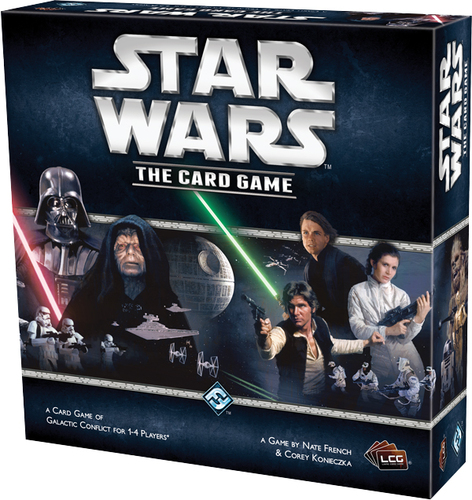
And this might be old news, but it was new news to me: There's a Star Wars LCG in the works—and it'll be out by the end of the year! My poor wallet!! I don't know how I'll possibly keep up with three LCGs—plus all of the other new games.

Anyway, we'll keep you updated on news as it's released. And thanks for reading!

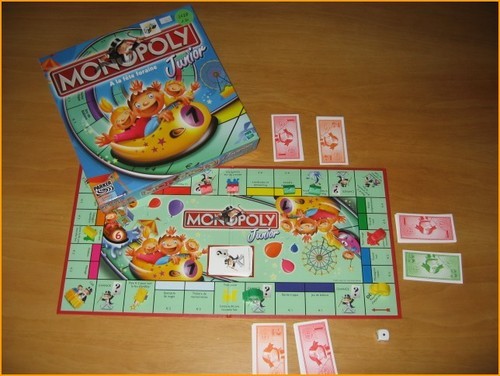
Monopoly Jr. - Bad Grandma!

By Jeremiah I should preface this post with a short disclaimer. Disclaimer is as follows: My children have 6 grandparents, all of whom are retired and love them very much. None of them are bad; it's just a goofy title for a blog post. Please don't take the following post personally; thank you for loving my boys and getting them games!!

That being said...I recently had the extreme pleasure of discovering that Monopoly Jr. is as equally unenjoyable as its grown-up counterpart.

A grandmother who will go unnamed recently introduced the game to my boys and sent it home with them so we could enjoy it as a family. This was a very kind gesture, and well meaning. I had the opportunity to sit down with my sons and play this afternoon. Much like the adult version you are pretty much playing a game of chance (I often wonder why casinos don't have Monopoly tables in them), and I knew by the first time around the board I was going to lose. And sure enough...I lost. Mercifully, though, the junior version of the game plays in a much shorter time than the marathon style of the grown-up version.

My boys are gamers, yet they don't have the refined taste that years of gaming gives you, so they still enjoy Monopoly Jr.—or Bonoplewee as my youngest calls it.

You'll excuse me now, but I have to go bust out Castle Panic!

We Didn't Go to Gen-Con

So last week while Jeremiah was on vacation with his family, and Firestone had his own sort of busyness at the day job, the rest of the gaming universe had a little party called Gen-Con. Pretty much the Mecca for gaming geeks world over. There were more than a few games that launched/premiered at the con, and I'm sure more than a few surprises along the way. So today, we want to hear from you! What were the highlights of Gen-Con? What titles delivered the goods, or fell flat? And more importantly what were the sleeper games that no one knew about? Did you compete in any of the organized tournaments during the con? Did you win? Please, please tell us all the juicy bits! Leave 'em in the comments below! Thanks everyone! Hope you had a great time at the con!

When We Last Left Our Heroes...

Well, we tried something new here with a 2-player-focused week. we hope you enjoyed it; we had a lot of fun  making our lists of favorite games. Here's what you might have missed...We reviewed Reiner Knizia's brilliant Battle Line.

Jeremiah continued the Dead CCG series with a piece on Star Trek The Customizable Card Game.

We told you all about one of the great Spouse Games: Lost Cities.

Jeremiah shared his Top 5 games for 2 players.

And finally—because I couldn't decide on only 5—I told you my Top 10 games for 2 players.

We hope you're enjoying the blog, and have a great weekend. Thanks for reading!

Our Favorite 2-Player Games [Firestone]

I’m part of a large gaming group, and I have a wife who doesn’t particularly enjoy board games, sooooooo...I don’t find many opportunities to play games with only one other person. But I’ve played my share of them, and here are my 10 favorites—in no particular order. (I apologize that some of these are practically impossible to find now; invent a time machine.) Battle Line—It might be the best pure 2-player game I’ve ever played. I couldn’t believe how good it was the first time I played it. Check out our review here.

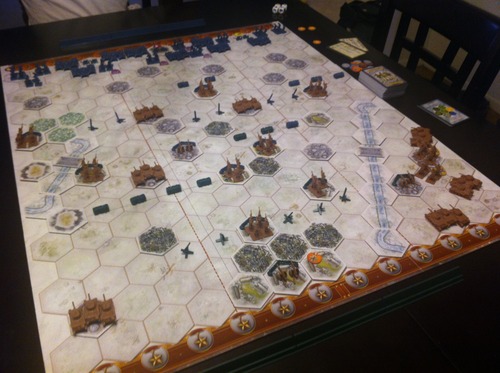
Memoir ‘44—This is a very light WWII wargame. It comes with plastic miniatures, and cardboard terrain you put on a plain map to create specific places. There are lots of real-life scenarios to play through—one side as the Axis and one as the Allies. My oldest loves this game. Any shortcomings it might have just disappear when he’s fully engaged with this, peppering me with questions about WWII.

Blood Bowl—This game gives new meaning to fantasy football. You have a team of Orcs or Skaven (rats) or Undead, or any of the many other choices—filled with players with unique skills and abilities—and you square off against an opponent. There’s chaos, dice, injuries, deaths, and thrilling, last-second heroics as your tiny rat receiver slips through the defense, runs down the sideline, and rolls the exact number he has to to catch the ball in the endzone. If you can get some other players and a full league going, it’s some of the best board gaming ever.

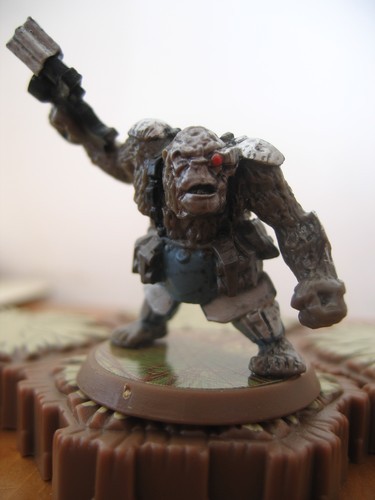
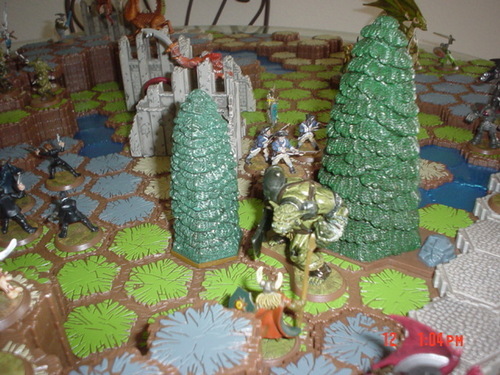
Heroscape—A few years ago Hasbro had an insane idea for a turn-based squad game where people and creatures from all over time and space came together to fight for supremacy. You might have dragons, samurai, robots, orcs, and a cowboy all on your squad. It also came with interlocking hexagonal terrain that allowed you to build amazing and epic and creative maps. AND IT WAS AWESOME. I’ve played this many times with my 8-year-old, and it’s created some great stories. "Dad, remember that time my cyborg gorilla killed your giant robot? That was awesome..." I’m looking forward to my youngest being old enough for us have some epic 3-player games.

Jambo—This card game is part of the Kosmos line of 2-player-only games. You’re a merchant in Africa, and you’re trying to make more money over the course of the game than your opponent. You have special items, people, and animals to help you.

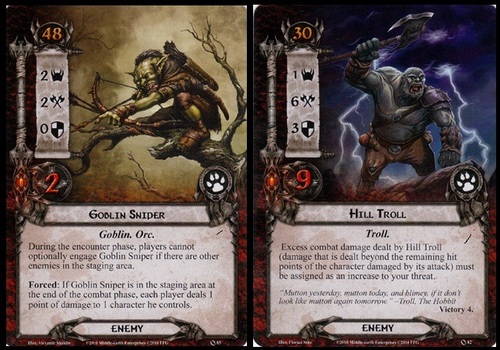
Lord of the Rings: The Card Game—Jeremiah talked about this one yesterday. It has gorgeous artwork, it’s expandable, and it’s just lots of fun. Yes, sometimes the draw of the cards means you just auto-lose, but that feels okay when you’re playing with someone against the game itself. I’ll continue to buy this game as long as they print it…

Fjords—I feel bad talking about this one because it’s long out of print. It has tile-laying similar to Carcassonne, with some area control thrown in for scoring. Plus it’s small, portable, and plays really quickly!

Lost Cities—You can read our review here. At least part of my love for this one stems from the fact that it’s the first game my wife played with me—and one she’ll still play on occasion.

Lord of the Rings: The Confrontation—Here’s another one that's out of print—though it’s possible they’ll reprint it with the new Hobbit movie coming out this winter… Anyway, it’s kinda like Stratego, in that you have pieces that only face you, so your opponent's not sure who’s who. Each piece is a character, and each character has special abilities. The good guys are trying to get Frodo across the board to Mordor, and the bad guys are trying to kill Frodo. Superb game.

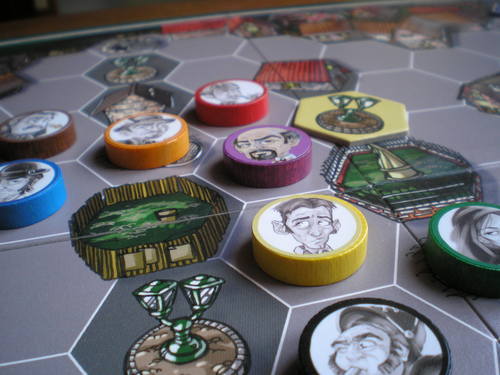
Mr. Jack—Who would have thought a 2-player game of deduction would ever work? Well I’m glad designer Bruno Faidutti did… One player is Jack the Ripper—who’s trying to remain undetected and escape, and one is Scotland Yard—who’s trying to figure out which character is Jack. I can’t explain the mechanics in such a short space, but it works, and it’s fast, and it’s fun.

Well, those are our lists. What are some of your favorite games to play with two people? Leave a comment below, and thanks for reading!

Our Favorite 2-Player Games [Jeremiah]

My top two-player games aren't necessarily designed solely for two players. In fact, a game being strictly designed for two players is often a deterrent to me because I often game with at least more than one other friend—or at least want the flexibility to do so. That being said, unlike Firestone, my wife is a closeted gamer at heart. While she will deny it in public, she has, over the last 10 years of our marriage, ventured pretty far down the dork path from time to time. So it's not uncommon for a fly on the wall to see us sitting at the dining room table in heated competition. My only complaint in all of this is that she's a pretty bad cheater (again, something that she denies implicitly), and while I have no grounds or basis for such an accusation, I firmly believe foul play is afoot when she and I game.
Anyway, enough about my suspicions, here's a quick list (in no particular order) of some great games for two players.
The Lord of the Rings: The Living Card Game
While this game is designed and published for two players, it's expandable for three to four players by purchasing a second core set. But for a real challenge go on a quest with only a single companion. This game will test your deck-building skills, as well as your strategic ability. I do often play with three to four players, and it scales well for the added players, but I love the challenge of the two-player game. Overall this has become one of my favorite games, and the LCG has become (to me) the perfect mix of CCG deck building, board game strategy and role playing story and plot development. If you're not playing this game, you should be!
Battlefield General: Spearpoint 1943
Collins Epic Wargames released this at Origins a few years ago, and a friend of mine grabbed it up. It's a really fun WWII-based deckbuilder; they've released some expansions since then and I hear the game keeps getting better. I'd like to play this more often, so I'll probably invest in my own copy pretty soon!
Carcassonne
I know what you're thinking... Two-player Carcassonne? Trust me, the style of play is vastly different from a multi-player game. My wife and I play this one-on-one all the time; about mid-way through the game it becomes a very competitive battle for farm land. The cool thing is that the crazy strategy that requires eight perfect tile pulls to make happen can ACTUALLY happen! Just remember that when you're playing with more players, they generally don't work, unless of course you convince the other players to play tiles that help by assuring them it's the right move for their strategy... Not that I would ever do such a thing.
Kingdom Builder
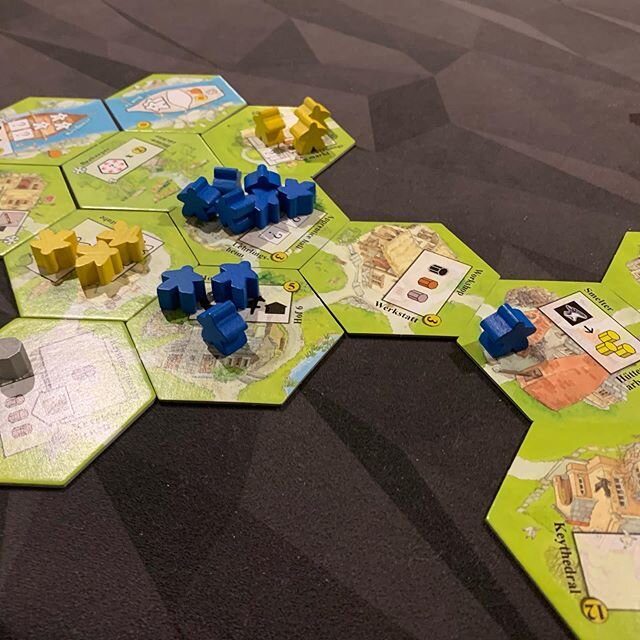
I totally prefer to keep the expansion in the game and play 5 players on this one. That being said, there is again a nuance to playing a two player game of Kingdom builder: Do you stay out of each other's way, and hope that you play the right scoring options to out-race your opponent? Or do you intentionally start some trouble and try to block out the other player from getting the nifty ability tokens?
Omen: A Reign of War
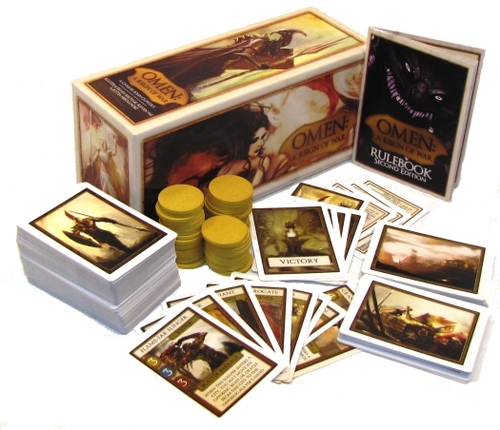
Two players clashing for control of Greece by drafting creatures, soldiers, and the like, you war over control of three battlefields. A really slick game for two players that's quick to learn, and a lot of fun.

Finding Lost Cities

By Firestone Some people have spouses who love to game with them, but for most of us, we’re always on the lookout for a game that might entice our significant other to join us in this hobby.

For many people, designer Reiner Knizia’s Lost Cities is the quintessential Spouse Game: It’s easy to teach, it’s 2-player only, there’s a decent amount of luck, and there are interesting decisions throughout.

If you’ve read our review of Reiner Knizia’s Battle Line, these mechanisms will be very familiar: play a card, and draw a card.

The theme is paper-thin, but every little bit helps when it comes to getting your wife or husband playing. You’re heading up a series of expeditions looking for fabled “lost cities.” The game comes with a small board, and a deck of 60 cards—45 of them run 2 through 10 five colors (or destinations), and then each color also has three Investment cards. You start the game with eight cards.

On your turn you will play a card—either down to one of the five expeditions in front of you, or into the communal discard pile for the color. Then you draw a card, either from the facedown deck or the top card from one of the color discard piles. You’re trying to get as many cards into as many expeditions as possible. The catch is that once you place a card for an expedition, the next card you play has to be higher than the last one played. It doesn’t have to be the next card in sequence; it just has to be higher. But the numbers only go two through 10, so if you start on five, you only have five more cards you can play—and that’s only if you’re able to draw those cards!

Since you’re forced to play a card each turn, sometimes you just want to delay having to start one of your expeditions until you can get some small numbers in that color, so you ditch a card onto a discard pile. You run the risk that’s just the card your opponent needed, but sometimes it’s a necessary evil.

Another twist is those Investment cards I mentioned earlier. There are three in each color, and you have to play them at the beginning of an expedition. You can play all three if you’re lucky enough to draw them—and brave enough to play them. That’s because the first one doubles the value of the expedition at the end of the game; the second one triples it; and the third one quadruples it.

Why is that brave, you ask? Well, that’s because each expedition you launch has 20 points subtracted from it at the end of the game. Thematically, you can think of this as the money it costs to launch these endeavors to the ends of the earth. So let’s say on the green expedition you’re only able to play an Investment card, a two, a three, and a five by the time the game ends. You’ve only scored 10 points, but you subtract 20 points from that and you’re now at -10…except that Investment card now doubles it. You’re at a cool -20. Be very careful where you Invest…

One other small rule is that there’s a bonus of 20 points for any expedition that has eight or more cards in it—including Investment cards.

The game ends as soon as the draw deck runs out. You add up the points in each expedition, subtract the 20 points, add the 20 points (if applicable), and multiply (if applicable).

The game suggests playing three rounds, and since the rounds are short, it doesn’t take long at all.

Lost Cities is part of the Kosmos line of 2-player games. If you play a lot of 2-player games, I highly recommend checking these out—especially Jambo, Odin’s Ravens, The Lord of the Rings: The Confrontation, and Balloon Cup. The artwork is colorful and evocative. The cards are oversized, and despite the fact that they have black borders, they don’t seem to be showing much wear.

Lost Cities is a very good 2-player game, and if you’re looking for the game to hook your spouse, this might just do the trick. Check back later in the week for our review of Lost Cities: The Board Game, which ramps this game up a notch.

Thanks for reading!

Dead Games - Pt. 2: Star Trek

[By Jeremiah]

So, this is kind of an odd game for me to be playing. I'm really not that big of a Star Trek fan, in fact, I'm a borderline hater. But a few of my gaming buddies wanted to get into the game, so I said, "Yeah, I'll go along with that." And when I say my friends wanted to get into the game, I mean, like a year ago nearly 15 years after the first series was printed, and several years after the last expansion of the Second Edition went to press. In my honest opinion, the best time to get into a CCG is well after the corpse is cold. 99% of dead games will have the bottom drop out on their value and you can buy boxes of starters and boosters for pennies on the dollar!

Stick with the First Edition - We play the first edition base set, along with the first expansion, mostly because it's super cheap to get into, (Alternate Universe - Booster boxes are like $10, If you look around on the internet.) but let me tell you, this game has problems. Decipher seems to have rushed it to market really fast. The biggest glaring problem to me is that there is no cost to play your cards. If you have a hand filled with heavy hitting crew members, ships, and equipment, you can lay 'em all down in one turn! Yep, just slap 'em down and start running missions! The gameplay is decent, but I have to be honest, I think we've done a fair job of butchering the rules.

Gameplay - So the game play looks something like this - During setup players take turns placing missions into the "space line" or "star line" basically in a big line across the table (you'll need a decent-sized table), then players take turns loading up these missions with "Dilemma" cards or "Artifact" cards. Dilemmas are just that, a dilemma your away team must face and resolve before completing the mission (mostly just by sitting around and talking about it - ok, that's not entirely true, just my dig on Star Trek); if you combo these up well, you can really throw a wrench in your opponents' works. Artifacts are items you find when you complete a mission, and they usually are helpful trinkets to add to your inventory.

It's Your Turn - On a turn players can play every stinking card in their hand if they want to, put them on a ship and then move the ship a certain distance along the space line thingy. Each mission card on the line has a distance value which determines your movement. If you choose to do a mission you must face and resolve all of the dilemmas, and then complete the mission - the mission usually consists of having a certain amount of abilities in your away team. (Each character card has a list of skills/abilities/attributes possessed by that particular character.) If your away team meets that criteria, you complete the mission and score the points for it. Yay. If not you have to wait until your next turn, wondering why you attempted the mission in the first place.

What Do I Think of it? - It's not the best CCG I've played, but it's not the worst either, as the expansions continued to hit the market Decipher made attempts to ratify the gaping holes in the game by adding card types and rules to the system. I don't think they ever got it to where they felt the game should be, so they released the Second Edition which revamped the game entirely.

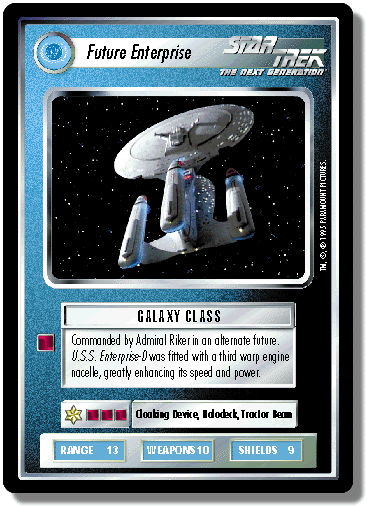
If you're a big Star Trek the Next Generation fan, first I apologize for the smart remarks, and second it's worth spending $20-$30 and getting 2-3 boxes, keeping it around and seeing what kind of cool/funny/off the wall decks you can build with it. And if you get a "Future Enterprise" in an Alternate Universe box, you can still fetch about $30 on eBay for it and make your money back!

Amazon Has Star Trek CCG Right HERE!

Hoplite To It! [A Review of Battle Line]

[Review by Firestone] If there’s a king of board game design, it would have to be Reiner Knizia. This German genius has designed hundreds of games—including many that are at the top of the Boardgamegeek.com list of highest-rated games. (He’s definitely designed some stinkers, mind you, but his highs make up for his lows.)

What makes him so interesting is that his games are so diverse. His games go from 2-6 players. Some have auctions. Some don’t. Some have tile-laying. Some don’t. Some use cards. Others dice. Others wooden bits. Some are ridiculously simple to play. Some will make your brain hurt. He’s a wonder.

According to Boardgamegeek, I own 45 of his games—and I’ve probably played at least 50 more of his that I don’t even own. One of my favorites is a gem called Battle Line—a 2-player card game that I can’t recommend highly enough.

In it you have 9 small pawns, that you place in a left-to-right line between you and your opponent; these represent battlefields. The goal is to “win” either three fields that are next to each other, or any 5 fields. Here’s how you play the game: you play a card, and you draw a card. That’s it. Super simple, right? But as with so many Knizia games, the simple play reveals hidden depth.

Thematically, you’re a Greek general, and you’re playing down troop cards to win battles. There are 60 cards, numbered one through 10 in six different colors. On your turn you have to play a card down to your side of one of the battlefields. Only three cards can be on each side.

The way you determine who won is that you compare the “formations” on each side. They’re kinda like poker hands. Three cards in a numerical row of the same color (straight flush ) > three of the same number (three of a kind) > three of the same color (flush) > three in a numerical row of any colors (straight) > any combination of three colors and numbers (high cards).

Sometimes you’ll both play three of a kind down, and the tie is broken by who has the highest numbers on their cards.
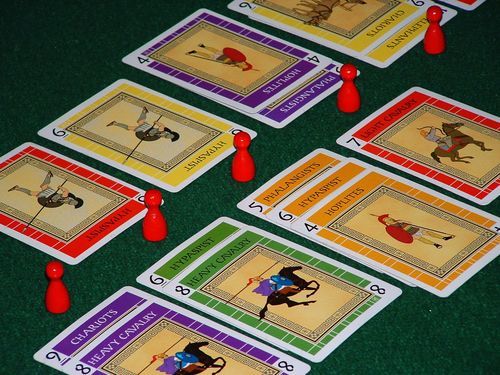
At the end of your turn you can “claim” a battlefield if you’ve won it (by both having three cards down and your formation beats your opponent’s). You can also claim it if your opponent has at least two cards down, and you play your third one and there’s no way your opponent could win the battle. For instance, if your opponent has two 4’s on his side, if you play your third of three 5s on your side, there’s no way your opponent can beat you, so you can claim victory there.

There’s a great deal of angst, because sometimes you don’t want to play a card down, because you’re still waiting for juuuust the right card in a few places. But you have to, so you’re forced to ditch a card on a battle you just know you won’t win. But that gives your opponent a chance to get closer to winning. It’s so tense and wonderful!

As I said, the winner is the first person to win three battles next to each other, or any five across all nine battlefields.

But WAIT! There are also some cards called Tactics cards, that let you mess with things. At the end of your turn, when you draw a card, you can draw from the regular Troops deck, or draw a Tactics cards. Those allow you to break the rules in some way. There are only 10 of them, but they can be powerful. One is a wild color; one is a wild number; one lets you steal an opponent’s card from an unresolved battle, and one changes the rules for determining winner in one battle so that it’s only the numbers that count.

Some people think the Tactics cards insert too much luck, so they don’t play with them. I’ve played both ways, and I like both ways. Without Tactics cards makes for a more tense and thinky game, while playing with them makes it a little more thematic and “loose.”

If I had one complaint, it would be about the theme. It’s pretty boring, and publisher GMT Games used boring artwork on the cards. They’re functional, they’re just not fun. I must not be the only person who feels that way, because there are LOTS of rethemes for this game on Boardgamegeek, where people have created entirely new images to use for the game.

But other than that purely subjective gripe, this is one of the best 2-player games I’ve ever played—maybe the best. It’s super cheap, so consider giving this one a whirl!

 Thanks for reading!

It's 2-Player Games Week!

One of my favorite things is when my wife throws me a bone and plays a board game with me. See...board games are stressful to her—especially if it's a new game. Learning new rules, and being unsure as to what to do, stresses her out.I, on the other hand, play games to relax. It's a great way to wind down. So the two of us don't play very often. But I'm always looking for good, simple games that she might like.

So this week we're dedicating the whole week to 2-player games! If you're looking for some ideas for Spouse Games, look no further. Check back often, and thanks for reading!