When We Last Left Our Heroes...

We're wrapping up another week here at Theology of Games. Here's a recap of what you might have missed. We reviewed Fluxx, a chaotic card game that's never the same twice.

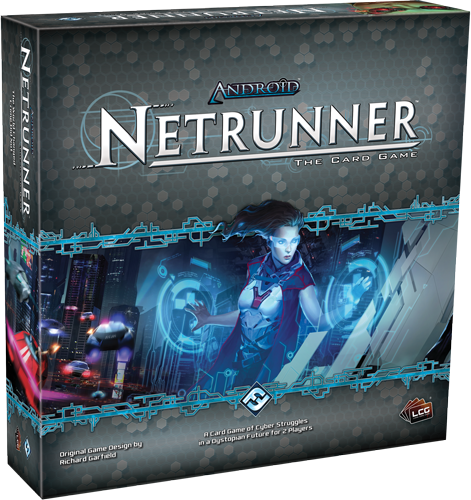
We got ridiculously excited as Fantasy Flight released the rules for the upcoming LCG Netrunner.

We reviewed the latest Donald X. Vaccarino game: Infiltration.

We announced the winner of a copy of What's It To Ya?—and it was the guy's birthday!

We talked about the 7th expansion for the uber-successful Dominion.

We interviewed Jason Kotarski about the Kickstarter project for his debut game: The Great Heartland Hauling Co. And it fully funded today!

We reviewed Infinite City.

And finally, we got some more details about the new Resistance game coming out. Whoa...that's a lot! Have a great weekend, and thanks for reading!

New Details About the New Resistance

The specifics are trickling out about the expansion, or sequel, or prequel, or...WHATEVER to one of our favorite games: The Resistance. According to a thread on Boardgamegeek, this will be a standalone game, and set in Arthurian England. The description says: Arthur represents the future of Britain, a promise of prosperity and honor, yet hidden among his brave warriors are Mordred's unscrupulous minions. These forces of evil are few in number but have knowledge of each other and remain hidden from all but one of Arthur's servants. Merlin alone knows the agents of evil, but he must speak of this only in riddles. If his true identity is discovered, all will be lost.

That line about Merlin needing to speak in riddles sounds tantalizing. Some people thought it was just a simple retheme, or "Werewolf with missions," but someone who's playtested it says it's not really like Werewolf at all—no player elimination, for instance. That is a very good thing, because the lack of player elimination is one of my favorite things about The Resistance.

Finally, we've got this superb quote from Rich Sommers—who plays Harry Crane on the TV show Mad Men, and is an avid gamer: "Got in five plays of this last week, and I can confirm: It is not a Werewolf clone. It is more like The Resistance: Enhanced.

And it is GREAT."

We can't wait to give it a whirl! Thanks for reading!

Infinite City - The City of the Future!

While it's not the most intricate or ingenious game design, Infinite City is a pleasantly surprising, quick-moving, tile-placement game that has players taking the role of rival corporations jockeying for control of a quickly expanding city in a booming economy.

In the box you will find a whole mess of tiles, and a bunch of colored pegs.

Player turn—Turns are pretty simple: Place a tile and put your colored peg on it. Then resolve the game text on your tile. Draw back up to 5 tiles.

The goal is to have as many of your colored pegs adjacent to one another as possible; you score 1 point for each peg in a group of three or larger. There are also tiles that have a numeric value on them or a "silver lining." If you control a tile with a numeric value on it, you also score that number of points, and the player controlling the most tiles with the silver lining scores a point for each of those as well.

The game text on the tiles is where the game becomes interesting; the tile effects let you swap two placed tiles, remove pegs from a previously tile, force the next played tiles to be placed adjacent to the one you just placed, and so forth.

The game ends when a) a player runs out of pegs, or b) all 5 of the "Power Station" tiles are played. Scores are tallied and the player with the most points wins control of the city and its vast resources, fame, wealth, and power!

The game supports 2-6 players, but I've found that 3-4 players is the sweet spot. With 6 players there are a TON of tiles being placed, shifted, removed, and thrown across the room before you place your next tile. It doesn't totally ruin the game; it just makes it a little more tedious than a game of this type should be.

The abilities of the tiles are pretty well balanced, and even with 6 players in the game, we've found that no one is really ever out of the game at any time. One player even commented that he was about to take on the king maker role after having a few of his tiles moved on him; instead he had a few well played tiles and ended up turning the game around for himself and pulling out the win. I enjoyed that about the game; there's nothing worse than playing a game for an hour when you know full well who is going to pull out the win, and everyone is just along for the ride.

The artwork is great—everything is done in an Art Deco/City Of the Future style and they all look really slick; they remind of those great Superman cartoons from the early 1940's.

This is definitely a game worth picking up and working into your rotation; it's not a reinvention of the wheel, but it's a pretty enjoyable iteration of it.

An interview with Jason Kotarski, designer of The Great Heartland Hauling Co.

Jason Kotarski is a pastor in Michigan; he and his wife have a young daughter, and another on the way. His first game design recently debuted on Kickstarter, and as I type this, he’s 80% of the way to being fully funded. He took time out of his busy schedule to answer some questions from us. How did you first discover Euros?

My wife and I were out Christmas shopping one night at a local mall and we stopped to look at a kiosk that was selling games and puzzles. Her face lit-up when she spotted a little game called Settlers of Catan. She got super excited and told me it was an awesome game that she had played in college and that we had to buy it right then and there. We finally got it to the table some time later after we rounded up another couple to play with and I fell in the love with the game. I liked it because everyone played to the end and that game wasn’t focused on being mean and eliminating the other players. I had a bad experience with my brother-in-law taking the role of world dictator a little too seriously in Risk, so it was a nice change of pace to play a game that was about doing your best without dealing with direct conflict. After playing Settlers for a while, I remember I went to a local hobby shop because I thought I saw some more weird board games there. I ran into a friend from high school who worked at the shop and he convinced me to try Carcassonne and told me about a Web site called BoardGameGeek.com. Then, I Googled  “board games” and stumbled on the Dice Tower and the Board Games with Scott videos and I was hooked. I felt like I had discovered that secret clubhouse of awesome and started amassing my collection. I’ve come to see gaming as a social outlet and something interesting to bring people together. It’s also a nice option to have something other than flipping on the television as a form of entertainment. It’s good clean fun, you know?

What are your Top 5 games, and why?

This is such a tough question for me. I am one of those people who loves ideas and all kinds of different stuff so it is really hard to narrow down my favorites to 5 but I’ll do my best.

In no particular order:

  • Ticket To Ride: Marklin Edition—This one is the first Ticket to Ride games I played. I love how easy it is to teach and the streamlined game-play. I played a lot of Rummy growing up so the set-collection aspect of the game felt very familiar to me while the building train routes and hidden goals felt very fresh to me. You never have enough time to do everything you want to in this game so it always leaves me wanting to play just a little more. It’s also one of the go-to games for sharing hobby games with more casual folks.
  • Incan Gold—I love this game because it works with larger groups of people, is easy to teach, and it provides a very tense, engaging experience. It’s a great combination of press-your-luck and social experiment. It’s a game that allows you to learn a little something about the people you are playing with. The theme is great! Who doesn’t want to pretend they are an Indiana Jones-esque explorer for a few minutes with friends?
  • Pandemic—Pandemic sort of defined the cooperative game genre and it still holds up for me. Players work together to save that world from deadly diseases that are breaking out in epic proportion around the globe. This game also introduced me to variant player powers that give each player a unique ability. There is a lot to explore in this game. I love the rewarding feeling you get when you actually manage to save the world.
  • Carcassonne—This is my wife’s favorite game hands-down. We've played this more than any other game in our collection. It’s another one of those classic gateways that really leaves an impression and begs to be played again and again due to its simple rules and ever-changing play area. The expansions have really helped the game to grow with me as a gamer. We usually throw in Inns and Cathedrals along with Traders and Builders when we play this. It’s beautiful to look at, too. Great game.
  •  Stone Age—I remember playing this one pretty early on and loved how it built on the civilization expansion of Settlers of Catan with newer mechanics. I love sending my little caveman workers out to hunt and gather and help feed my little tribe. Stone Age is a great game to look at when you want to take a baby step or two up from Settlers.

Tell us the genesis (no pun intended) of The Great Heartland Hauling Co.

Ha! I was actually chatting with a truck driver who was bringing food to my church for a food ministry we were doing at the time. He told me that the company that hired him to bring up the food was paying him less per mile than what it cost to operate his truck. He then told me the only reason he took the job was to get most of his expenses paid on the way up so he could cross over to the other side of the state to pick up some greens to take to Florida. The job on the way to Florida paid him twice as much so he was still able to make a profit on the trip. When he was talking, I instantly thought there was a game somewhere in his story, so I went home and made one. It turned out pretty good, so I took it to a design contest and got some great feedback that launched me into a search for a publisher that eventually landed with Dice Hate Me Games.

How did you connect with Dice Hate Me Games?

I had heard about them through their Kickstarter campaign for Carnival and was struck by design work Chris Kirkman did for the game. They got my attention with the look of their games. I didn’t end up backing the game but I checked out the Dice Hate Me booth at Origins this year, met Chris and Monkey, and we just hit it off. I showed them my game and told them that I was going to request to be released from a contract I had previously made with another company called Cambridge Games Factory after some long delays. Dice Hate Me had a pretty full release schedule but they were enthusiastic about my game and offered to help me explore some other publishing options if I ended up leaving my previous publisher. They told me that they really couldn’t take anything else on but I was convinced after meeting them that it was time for me to move on. I did decide to move on and Chris and Cherilyn ended up showing the game to some friends that told them they had to publish it so I got a phone call the day I terminated my contract with Cambridge Games Factory and Dice Hate Me offered to publish the game and get it on the fast track to publication. Now the game is on Kickstarter headed for a January 2013 release and I couldn’t be more pleased with how it’s turning out.

What’s your favorite mechanism in The Great Heartland Hauling Co.?

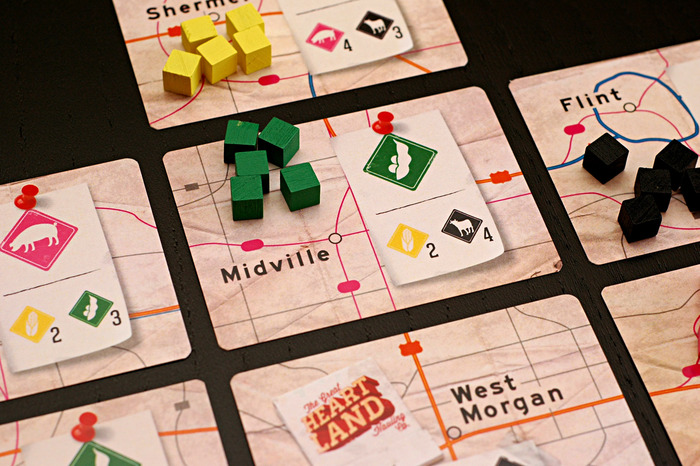
Heartland Hauling is essentially a game of hand management with a bare bones pick-up-and-deliver system played out on a modular playing area. I think the mechanic I like the most is the simple pick-up-and-deliver component. In the game you use gas cards, or points, to move around the Heartland to pick up wooden cubes of freight (using goods cards), to deliver them (also, using goods cards) to different locations trying to earn the most profit. It’s a very tactile experience. You move your little truck, hand in the cards, and move around little wooden cubes. I had never really played pick-up-and-deliver games before so I didn’t have much to go on besides the name of a mechanic I had heard about that seemed to fit the theme of the game. I just made it up as I went along and I think it represents the theme well and has an interesting take on a familiar mechanic (at least to train gamers) that is fleshed out in a new way.
Is this your first attempt at game design?

This is my first design, which actually kind of blows me away when I think about it. I mean, who gets to publish their first game with a great company that puts out interesting games and has such a solid reputation? It’s super exciting for me and is really driving me to continue to stretch my creative wings. I have a few others designs in the works and one game that is currently being considered by a publisher in Europe. It’s a fun way to get to contribute to the hobby I love in such a big way.

Star Trek or Star Wars?

Star Wars all the way! I mean, I dig the J.J. Abrams Trek reboot but I grew up on Star Wars. I’m pretty sure my first crush was Princess Leia so that shows you just how nerdy I really am!

Were you disappointed that Dice Hate Me decided to change the theme from your beloved Michigan to a broader “heartland” theme?

The theme didn’t really change at all, just the art and the name. The prototype, originally called Over The Road, had a darker, grittier feel to it. It looked a lot more like the game had an urban setting but that wasn’t the intent. Chris Kirkman brightened up the color pallet and gave it an Americana feel which I think goes with the new name, The Great Heartland Hauling Co., really well. I think the new art and name really captures the original inspiration for the game so I’m quite pleased. I’m just glad they didn’t want me to add aliens, or something like that, to the game. I wanted that Euro-game-meets-Middle-America feeling and I think we kinda nailed it!

How has being a pastor influenced you as a game designer—if at all.

I think that being a pastor has helped me grow as a thinker and as a person that can take an idea and bring it to life. I work a lot with communicating abstract ideas and planning concrete events in my church work, so I think the two kinds of work are similar in that way. I get to stretch my brain in all kinds of different ways as a pastor and as a game designer. And for me, the community aspects of gaming and the church are hugely important to me, so I think they fit together nicely. I’ve said this before, but the thing I love about games is the way that they bring people together in real life. I don’t think we have enough of that. Relationships are really important to me because people are really important to me. So if my games, or my church, can bring people together in meaningful ways, I believe that I am engaging in meaningful work.

Build your perfect sandwich for us.

I actually think I just had the perfect sandwich at a grilled cheese restaurant in Cleveland called Melt. The sandwich was called The Melt Pig Roast and it had Muenster cheese, chipotle pulled pork, fried sweet potatoes, and a spicy coleslaw. I’m pretty sure it changed my life.

----------------------------------------------------------------------------

Many thanks to Jason for answering our questions. Head on over to Kickstarter and check out The Great Heartland Hauling Co. for yourself! And thanks for reading!
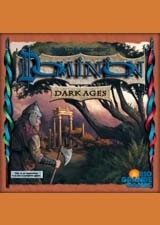
Dominion gets a 7th expansion...

Rio Grande has released info about a 7th addition to the Dominion franchise: Dark Ages. The expansion will include 500 cards, including 35 new Kingdom cards and a few replacements for estates and such. They're touting a couple new baddies to give to your opponents and a few cards that are only acquired by specific other cards. You can see the official Rio Grande description here. And for some nifty card previews from the game designer himself, click here. It looks like Rio Grande and designer Donald X. Vaccarino are doing their best to keep the Dominion franchise alive and relevant—and quite honestly, that's okay with us.

Are you looking forward to another installment of Dominion? What are your favorite expansions? Leave it here! And thanks for reading!

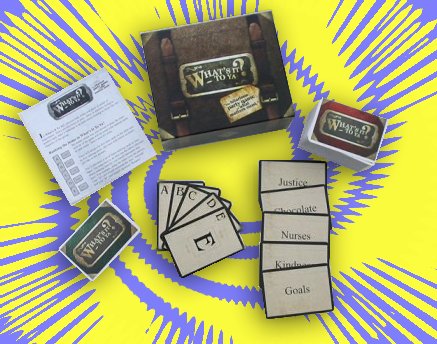
What's It to Ya... The Winner is Announced!

Well a few weeks ago we reviewed a nifty little game called "What's it to Ya?"—a game that, on the surface, is a fun, laugh-producing party game. But for those in ministry, it can also be used as a powerful teaching tool. Click here to check out our review. We also launched a contest for the game, and entries were taken through our Facebook Page.

Well today on Random-Draw.com we've selected our winner!

And the winner is!

Scott Cohoon!

...and there was much rejoicing.

Scott, thanks for entering, and please tell all your friends how nice the folks over at TOG are!

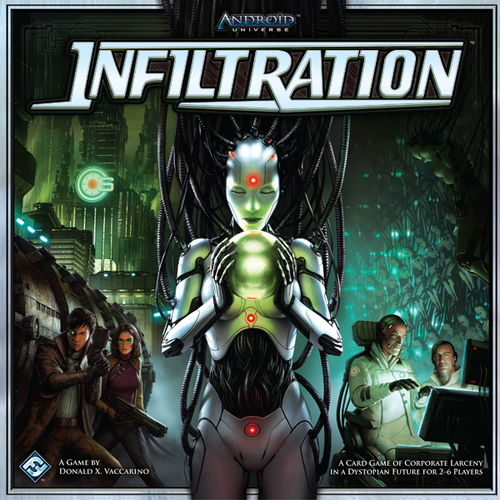
Infiltration: Take the Money and Run

Donald X. Vaccarino is the creator a little game called Dominion. It’s ridiculously popular—it’s like he invented a way to just legally print money.

His latest design is Infiltration—a fast filler for 2-6 players that has you in the position of breaking into a corporation to steal as much as you can before the guards catch you.

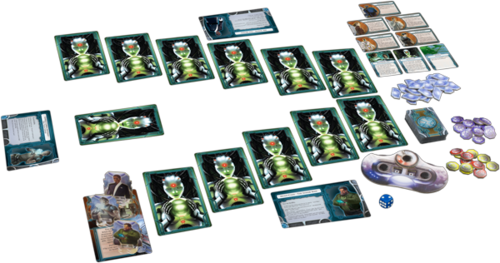
You lay out the cards for the “first level” in a stairstep up to the right, and then a “second level” to the building back up the left. On each turn, players choose a card from their hands, and then simultaneously reveal them. It might allow a player to move to the next room. Or take some of the loot in a room. And some rooms have locks or scientists in them, and you can play cards to interact with them. There are also some special cards that give you something extra and cool and unique to do.

Here we run into the first problem: turn order can be hard to overcome. Turn order changes every turn, but if you’re at the end of the pack, you’ll find yourself scrambling to get to good rooms and get some of the loot.

In the game I played, one player played a card that let her move into a room and interact with it—normally you can only do one or the other. Unfortunately, interacting with the room forced her to end her run, so she was out of the game.

There’s a built-in timer to the game. A threat number increases as the game goes on, and when it reaches a certain level, the guards catch anyone still in the building. So you have to figure out how much loot to grab before you high-tail it out. The weird thing is, there’s no trap door on the second-level set of cards. So while there’s cool stuff the further in you go, it’s almost impossible to get that stuff and still get out.

This also led to another problem with the game. One player was in the kingmaker role: he ends it early and hands Player X a victory, or lets it go one more round and it's between Player X and me. He can't do ANYTHING to better his position. He ended it—still not sure why

So only two people in our game escaped—one who used a special card to escape, and the other was the woman from way earlier in the game. If the player who used the special card hadn’t been able to get out, the woman would have won…with zero points. That’s ridiculous to me.

The theme of the game is stealing. I think the game justifies it because you’re stealing from a corporation, and CORPORATIONS ARE ALWAYS EVIL, AND ENJOY BOILING PUPPIES ALIVE IN THE TEARS OF KITTENS. I’m no apologist for corporations, but come on… So be aware you’re stealing. I’m not against playing the game because you’re stealing; I’m against playing it because it’s a bad game.

I think ultimately this game suffers from Stephen King Syndrome: Donald X has had enough wild success that people aren’t willing to push back against some of the bad ideas here. If you don’t mind some swinginess, you might enjoy this. And the theme is pretty cool. And it’s certainly a fast game.

Me, I think I’ll wait for the upcoming Netrunner game to release my inner hacker.

Netrunner is almost here!

One of our most-anticipated games is the upcoming reboot of Netrunner—a classic CCG by Richard Garfield, the designer behind Magic: The Gathering. What made Netrunner so great was that each side was distinct: the Corporation was trying to keep their secrets, and the Runner was trying to "liberate" them. The sides felt and played differently. It's been out of print for a while now, but Fantasy Flight is bringing it back in a Living Card Game format--the same one used for Lord of the Rings: The Card Game. That means they'll be coming out with regular packs of cards, and each pack will have the same cards. No more buying pack after pack in hopes of getting a sweet card to add to your deck.

They're going to release it at GenCon, and they posted a PDF of the rules today.

Anyone excited about this besides us? Anyone play the old game back in the 90s?


Fluxx—No Capacitors Needed!

Review by Jeremiah In 1997, Andrew J. Looney better known as Andy Looney released Fluxx, through his upstart gaming company "Looney Labs." Since then the game has taken off, generating four different editions of "Original Fluxx" and spawning seven different versions of the game, each with its own unique theme and flavor. Not to mention the available expansions for most versions.

We'll be posting reviews of the versions at a later date, but today we'll just cover the original version, known for being the "ever changing card game".

Yes, the game Fluxx, is in a constant state of Fluxx; if you're like some of my gaming friends, honestly this may not be the game for you. The randomness and unpredictability of this game has claimed many a casualty over the years. At the start of the game there is literally NO WAY for anyone to win. The rules are simple: Draw one card, play one card. Through the course of the game, the cards that are played determine the rules, game-play, and goal of the game.

There are several types of cards that can be played -

New Rules: These add different rules to the game; they can be as simple as how many cards you draw/play. Or in some versions they may dictate the type of accent you must speak with in order to gain the ability to draw more cards or gain some sort of advantage.

Actions: Play these cards and do what the card says. They often let you swap a currently desirable card with another player, or snatch that "Rules Reset" card from the discard pile so you can get rid of the large pile of new rules that takes an engineering degree to keep track of.

Keepers: Simply a card is played in front of you that remains in play until something happens to rip it from your clutches. These are often the cards that Goals cards will refer to as an objective for winning the game. By having the right pair of Keepers at the right time you can claim victory, or not. Keepers are typically a card that represents an object: Money, the Sun, Brain, Cookies, Time, Rocket, etc.

Goals: Finally, we know how to win the game! Goals generally require players to have a certain pair of Keepers in front of them in order to win.

Yes, you can win this game by having Milk and Cookies.

Creepers: Creepers are a newer concept to the Fluxx franchise; these are literally cards that creep right out of the draw deck and into your play area. They keep you from winning the game (unless, of course, the current goal, or a New Rule states otherwise), and are a general nuisance. There are only a total of  four of them in Original Fluxx: War, Death, Taxes, and the ever present and dangerous Radioactive Potato!

Most gamers love and/or hate the fact that you constantly have to rethink and adjust your strategy during the game. You could literally be holding the card that would guarantee your victory, and by the time your turn comes around the goal has changed 3 times and someone has stolen that card from you anyway. It is also quite possible that the rules will dictate that you play a card that instantly claims victory...for another player! It happens—deal with it!

This is a great family/youth/group game that supports up to 6 players, and is generally a quick play (I've played games that last as little as 3 minutes or have gone up to 35 minutes). It sells for under $20, and because of the random aspect it has a pretty high ceiling in terms of re-playability.

In case you haven't picked up on this, Fluxx isn't a game for everyone. If you feel the need to plot your strategy out 3-4 turns ahead, you will probably get a little flustered with the game, but for some quick-moving, light-hearted, think-on-your-feet, silly fun, it can't be beat.

To Be Continued...

We've had a great first month of blogetty blogging here at TOG, and we wanted to take a second and say thanks to all of you who have read, shared, liked, retweeted, and commented on our posts here on the blog, as well as our other social media outlets! We sincerely appreciate it, and humbly ask for your continued support! We also thought we'd take a few seconds and give you a sneak peek at what we've got planned for month 2!

So here we go!

We've received a handful of review copies for some games, and we'll be reviewing those soon!

Walls of Light

Glory to Rome

and soon Zombie in my Pocket!

We'll also be reviewing some classics and new games:

Fluxx

Bang!

Mage Knight and more!

And look for our interview with Heartland Hauling Company's designer Jason Kotarski!

All that plus more news, deep thoughts and we'll talk more about our favorite dead CCGs too!

Thanks again for all your support! See you next week!